Pakistan Requests $10 Billion US FX Support Facility After Iran Mediation Role.

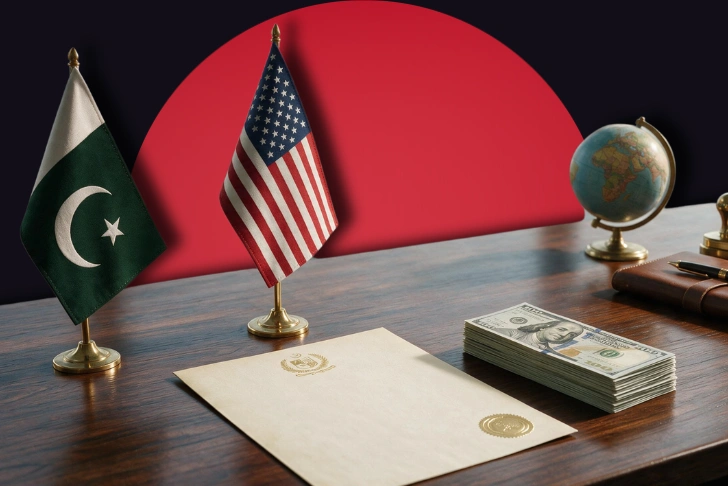
Pakistan has requested a $10 billion exchange stabilization facility from the United States in a strategic move aimed at strengthening its foreign exchange position, easing debt pressures, and mitigating external financing risks.
Finance Minister Muhammad Aurangzeb submitted the request during a high-level meeting with U.S. Treasury Secretary Scott Bessent in Washington. The proposed Bilateral Exchange Stabilization Support Facility would carry a maturity of up to five years and could be structured through dollar injections, currency swaps, or backstop financial guarantees.
Strategic Timing Following Diplomatic Role
The financial request follows Pakistan’s key diplomatic involvement in brokering communications linked to the regional Iran conflict. Islamabad’s mediation efforts elevated its geopolitical standing and opened direct avenues for bilateral discussions on economic backing with the United States.
During the bilateral talks, Minister Aurangzeb underscored Pakistan’s macroeconomic recovery alongside the economy’s ongoing vulnerability to regional geopolitical shifts. Although an official readout from Pakistan’s Finance Ministry highlighted mutual plans to deepen trade cooperation, encourage U.S. investment, and advance strategic projects, it stopped short of explicitly mentioning the $10 billion figure.
Purpose of the Financial Backstop
If approved, the U.S. bilateral mechanism would directly reinforce State Bank of Pakistan reserves, take pressure off the Pakistani rupee, and lower long-term reliance on emergency assistance from multilateral institutions.
Pakistan continues to enforce tight fiscal and monetary policies under its ongoing International Monetary Fund (IMF) program. Central bank projections indicate that foreign exchange reserves could return near peak levels of $20 billion by late 2026 under favorable market conditions.
Navigating Liquidity Pressures
Islamabad narrowly averted sovereign default in 2023 through a $3 billion IMF standby arrangement, which was later succeeded by a $7 billion Extended Fund Facility and a $1.3 billion climate resilience loan.
Despite progress, Pakistan’s short-term liquidity remains heavily dependent on commercial deposits and loan rollovers from friendly nations. A recent $3.5 billion repayment to the UAE underscored this fiscal fragility, even as Saudi Arabia provided a $3 billion rollover.
Expanding Bilateral Commercial Ties
The financial proposal marks an acceleration in commercial engagement with Washington. Recent discussions with U.S. counterparts have spanned cryptocurrency payments, real estate redevelopment—including New York’s Roosevelt Hotel—and mining investments. Notably, the U.S. Export-Import Bank recently announced $1.25 billion in potential financing for the Reko Diq copper-gold project.
While neither the U.S. Treasury nor Pakistan’s Finance Ministry has formally verified the exact financial parameters, diplomatic sources suggest high interest in Washington regarding extended economic stabilization for Pakistan.
 Global
 Global
 Global