Pakistan Approves Key Changes To AML-CFT Regulatory Framework
Listen3 min
Read aloud by your device’s built-in synthetic voice, not a recording. Needs a browser that can read aloud.
✧ GENERATE BRIEFING
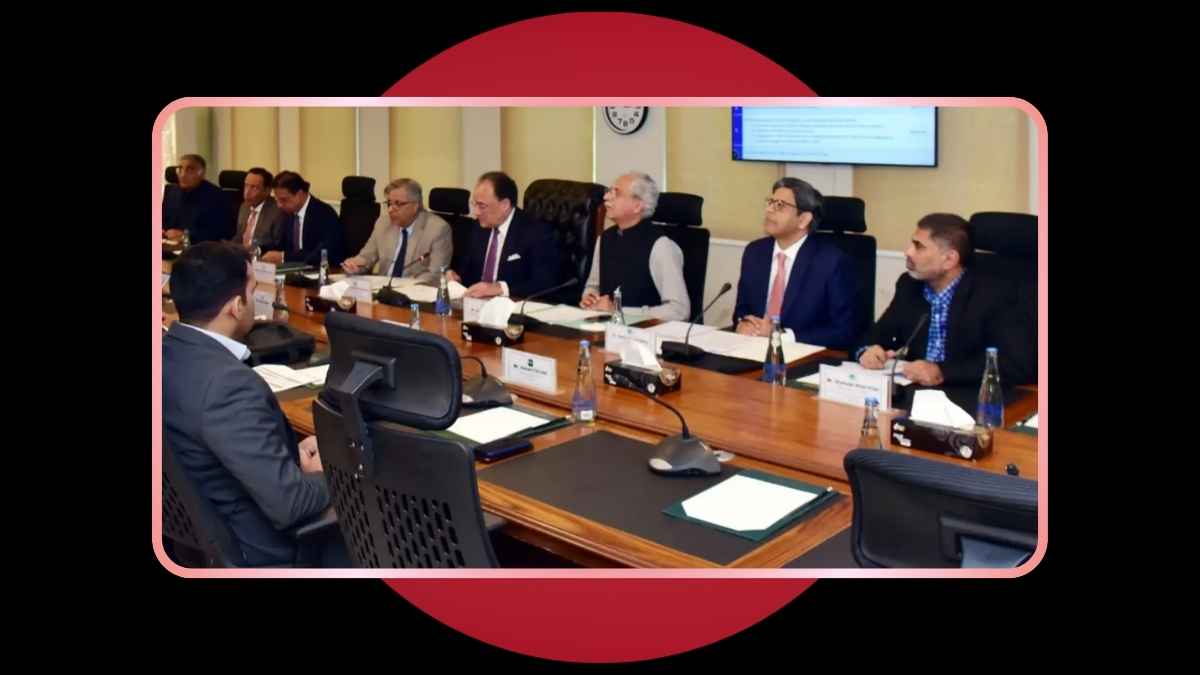
The National Executive Committee (NEC) on Anti-Money Laundering and Countering the Financing of Terrorism (AML-CFT), chaired by Federal Minister for Finance and Revenue Senator Muhammad Aurangzeb, convened its 19th session at the Finance Division on Tuesday, October 27, 2026. The high-level body approved major structural updates to Pakistan’s legal and AML-CFT regulatory framework, extending oversight to virtual assets, maritime jurisdictions, and large cash transactions.Key regulatory changes, statutory inclusions, and institutional capacity upgrades include:Inclusion of Crypto/Virtual Assets Regulator: The committee approved the inclusion of the Pakistan Virtual Assets Regulatory Authority (PVARA)—established under the Virtual Assets Act, 2026—into Schedule IV of the Anti-Money Laundering Act (AMLA). This legal integration mandates Virtual Asset Service Providers (VASPs) to strictly enforce FATF-compliant Anti-Money Laundering, Know-Your-Customer (KYC), and Travel Rule frameworks.The NEC approved adding Section 28 of the Pakistan Maritime Zones Act, 2023, into Schedule I of the AMLA, formally categorizing illegal maritime trade, smuggling, and off-shore financial offenses as predicate crimes subject to anti-money laundering enforcement.
Pakistan has approved key changes to its anti-money laundering and counter-terrorism financing (AML-CFT) framework, including revised thresholds for reporting large cash transactions and the inclusion of additional regulatory and legal provisions in the Anti-Money Laundering Act (AMLA).
The decisions were taken on Tuesday, October 27, 2026, at the 19th meeting of the National Executive Committee (NEC) on AML-CFT, chaired by Finance Minister Senator Muhammad Aurangzeb at the Finance Division in Islamabad.
Statutory Amendments to AMLA Schedules
To ensure alignment with international Financial Action Task Force (FATF) standards, the committee approved expanding the scope of the AMLA through statutory schedule additions:
| Statutory Addition / Regulatory Revision | Targeted Legal Schedule | Operational / Compliance Impact |
| Pakistan Virtual Assets Regulatory Authority (PVARA) | Schedule IV of AMLA | Subjecting crypto platforms & VASPs to mandatory AML/CFT oversight |
| Section 28, Maritime Zones Act, 2023 | Schedule I of AMLA | Classifying illicit offshore & maritime trade as predicate AML offenses |
| Currency Transaction Report (CTR) Thresholds | Financial Monitoring Framework | Updating mandatory cash transaction reporting thresholds for banks |
Adding PVARA to Schedule IV brings virtual asset service providers, cryptocurrency exchanges, and digital asset custodians under statutory regulatory reporting. Licensed entities will be required to maintain customer due diligence (CDD/KYC), execute real-time transaction monitoring, and report suspicious activities directly to the Financial Monitoring Unit (FMU).
Revision of Cash Transaction Thresholds
The NEC endorsed proposed updates to the threshold for Currency Transaction Reports (CTRs). CTRs serve as a primary financial monitoring tool requiring commercial banks and financial institutions to report all qualifying cash deposits, withdrawals, and foreign currency exchanges exceeding prescribed limits.
The revised threshold aims to reduce noise in financial data while strengthening the detection of illicit cash movements across the formal banking sector.
Capacity Building and AI Integration at the FMU
The committee reviewed the performance and analytical capacity of the Financial Monitoring Unit (FMU), which serves as Pakistan’s central Financial Intelligence Unit (FIU).
Members evaluated deployment strategies for artificial intelligence (AI) and machine learning (ML) models to automate financial intelligence processing, identify complex layering techniques, and detect suspicious transaction flows across crypto and traditional channels.
Minister Aurangzeb called for a clear, time-bound implementation roadmap to upgrade the FMU’s operational technology, stressing that seamless inter-agency cooperation among the State Bank of Pakistan (SBP), Securities and Exchange Commission of Pakistan (SECP), and the AML-CFT Authority is essential to safeguard the integrity of Pakistan’s financial system.