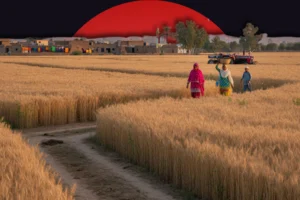
Budget 2026-27 Triggers Backlash as Low Agriculture Storage Rs7.1b Allocation Sparks Food Security Alarms
storage_agri_budget26
KARACHI: Beyond a simple lack of physical warehouses, deep-rooted flaws in the agricultural marketing network continue to trap local farmers in a cycle of poverty.
A lack of post-harvest financing options forces cash-strapped growers to sell off their yields immediately after harvest when market prices hit rock bottom.
Financial Hurdles and Market Exploitation
Commercial banks have shown minimal interest in providing post-harvest loans, leaving farmers completely exposed to volatile wholesale markets.
In these traditional marketplaces, small-scale growers regularly face unfair commissions, inaccurate weighing practices, and high charges.
For perishable goods, this lack of financial breathing room results in post-harvest losses ranging between 20% and 40% depending on the region.
These losses systematically lower overall farmer incomes, destabilize consumer market prices, and heavily damage Pakistan’s export competitiveness.
The Power Outage Obstacle
While a new financing facility has been introduced to encourage private sector investment, experts warn that structural issues will hinder progress.
A primary obstacle is the severe lack of electricity in rural farming communities, which directly impacts modern cooling facilities.
With rural areas facing 14 to 16 hours of daily power outages, running energy-intensive cold storage systems remains nearly impossible.
Analysts stress that until the rural energy crisis and market regulations are fixed, new funding packages will do little to stop the massive wastage.
About The Author