Budget 2026-27: BMPP Urges Industrial Relief and Export-Led Growth Over Punitive Taxation.
Listen3 min
Read aloud by your device’s built-in synthetic voice, not a recording. Needs a browser that can read aloud.
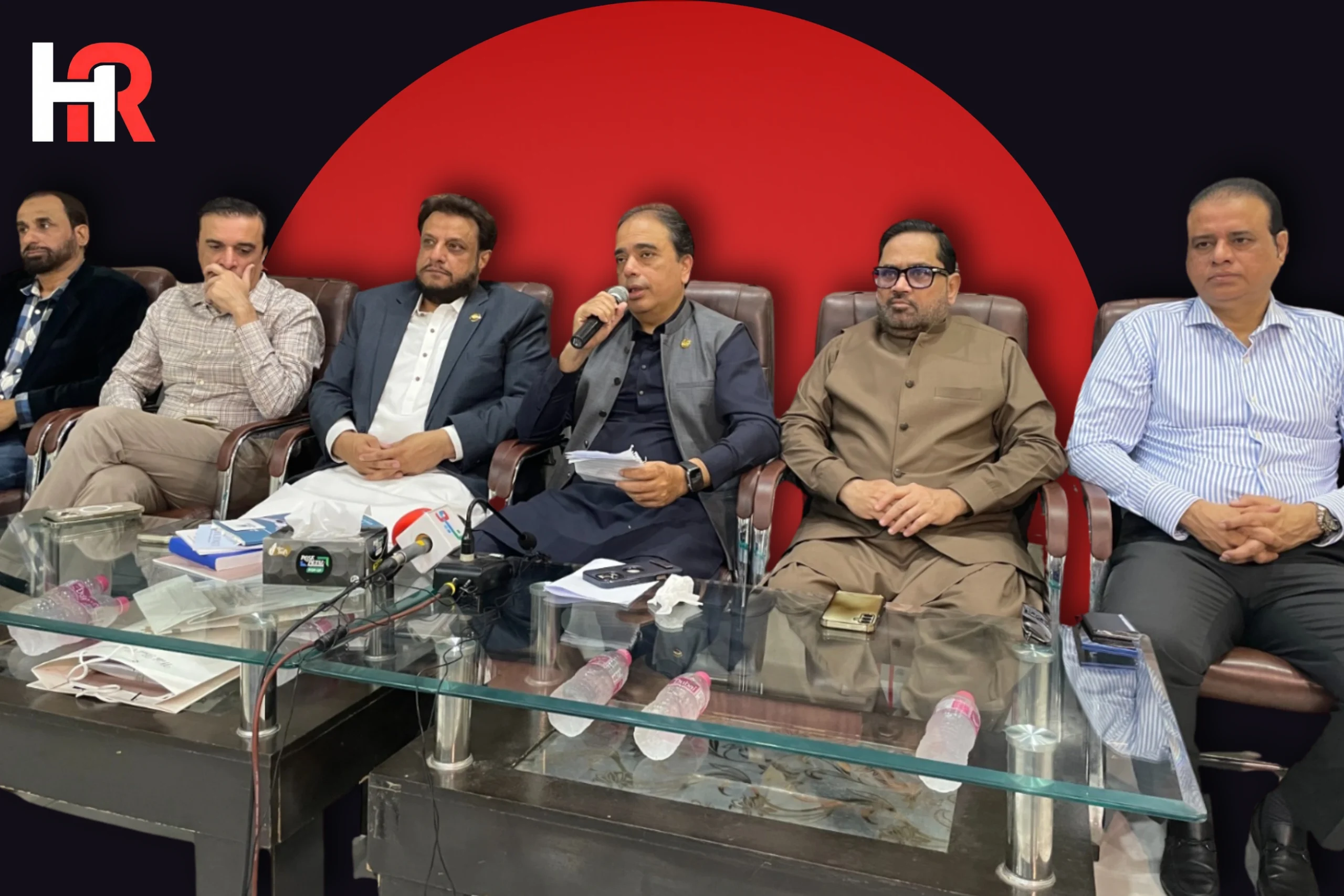
Demanding a radical shift from punitive revenue collection to industrial growth, the Businessmen Panel Progressive (BMPP) has urged the federal government to place export expansion and manufacturing relief at the heart of the upcoming federal budget.
Addressing a high-level press conference at the Karachi Press Club on Thursday, June 4, 2026, BMPP Chairman and Senior Vice President of the Federation of Pakistan Chambers of Commerce and Industry (FPCCI), Saquib Fayyaz Magoon, warned that layering additional taxes onto compliant corporate sectors is highly counterproductive. Instead, he stressed that the state must aggressively lower the cost of doing business to protect the economy from a severe contraction.
Dismantling Complex Taxation to Lower the Cost of Doing Business
As captured in the official media brief layout of “Headline New Template (27)_7.jpg”, business leaders expressed deep concern over the detached nature of the proposed fiscal targets. Magoon noted that the reported tax revenue target of Rs15,200 billion appears detached from ground realities, mimicking unrealistic targets from past cycles that eventually required downward revisions.
To reverse the ongoing decline in exports and counter regional cost disadvantages, the BMPP presented a series of urgent structural recommendations for the Finance Bill:
- Broadening the Tax Base: Bringing undocumented small traders and informal actors into the formal tax net through a simplified, lower tax structure rather than over-burdening existing filers.
- Abolition of the Super Tax: Demanding the complete elimination of the Super Tax, or at least a blanket exemption for manufacturing units, to restore industrial investment appetites.
- Rationalizing the GST Rate: Urging a reduction of the General Sales Tax (GST) rate to 15 percent (down from 18 percent) to stimulate economic activity and enhance market compliance.
- Raw Material Concessions: Eliminating the current 6-7% tax disparity between industrial and commercial raw material imports—particularly for plastic, steel, artificial leather, and polyester yarn—to curb the misuse of flying invoices.
- Sector-Specific Support: Providing dedicated fiscal concessions to high-potential segments, such as the chemical industry, to maximize domestic import substitution and build international export competitiveness.
Shielding Small Traders and the Salaried Class
“The budget should not be driven by overambitious revenue targets alone; instead, it must be growth-oriented. Setting unilateral policies without consulting stakeholders creates economic uncertainty, leading directly to capital flight and diminished export capabilities.”
In addition to industrial relief, the trade leadership advocated for strong social relief measures to shield common citizens and small retailers from inflationary headwinds. The panel proposed a simplified fixed-tax scheme for small traders, capping the turnover tax at 1.5 percent with a five-year audit exemption to facilitate voluntary compliance. Furthermore, Magoon asserted that individuals earning up to Rs100,000 per month must be entirely exempted from income tax, alongside a necessary 15 percent upward adjustment to the minimum wage to keep pace with living costs.