
How PMEX CEO Khurram Zafar is Modernizing Pakistan’s Commodity Networks.

Listen6 min
Read aloud by your device’s built-in synthetic voice, not a recording. Needs a browser that can read aloud.
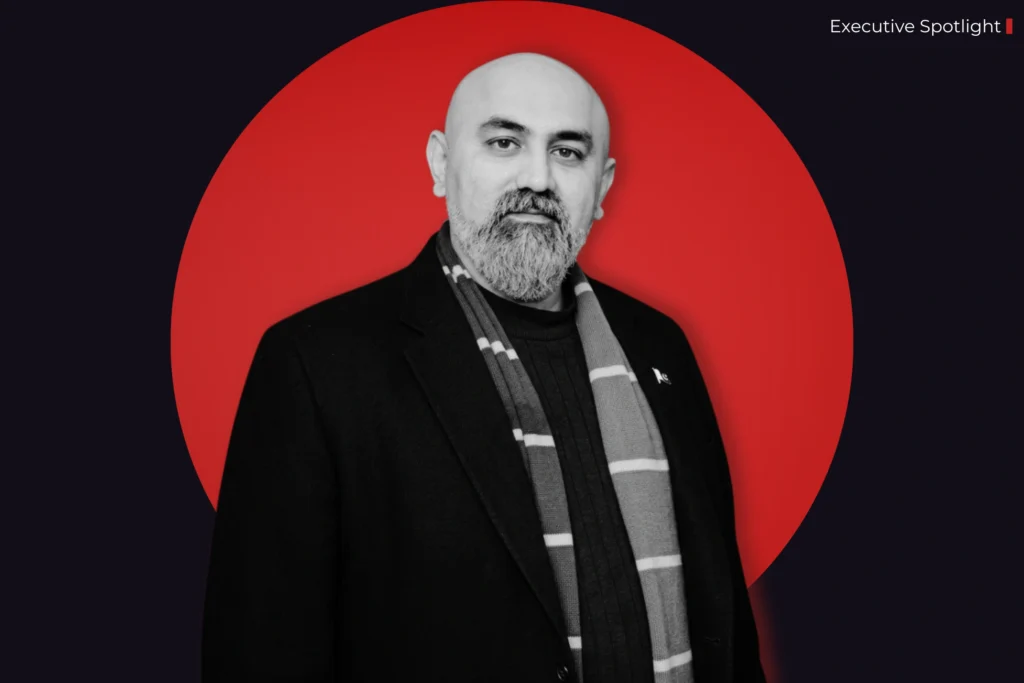
Pakistan Mercantile Exchange (PMEX), the country’s only regulated commodity futures exchange, has crossed Rs10.5 trillion in trading volume during the first 11 months of the current fiscal year, highlighting the rapid growth of a market that remains largely unknown to much of the investing public.
The exchange is currently processing transactions worth roughly Rs45-50 billion daily, according to PMEX Chief Executive Officer Khurram Zafar, despite operating through a broker network that has remained largely unchanged for years and receiving only a fraction of the public attention enjoyed by stock markets and foreign online trading platforms.
Breaking Down the Numbers
Speaking to The Express Tribune, Zafar said PMEX had recorded trading volume of approximately Rs10.5 trillion in the first 11 months of FY2025-26. Based on around 250 trading days annually and an average of 22 trading days per month, the exchange now handles close to Rs50 billion worth of transactions on a typical trading day.
The figures place PMEX among the largest organised financial marketplaces in Pakistan by transaction value. Yet, unlike the Pakistan Stock Exchange, the commodity exchange remains relatively unfamiliar to retail investors despite being operational for nearly two decades.
“The size of the market and the level of public awareness are completely disproportionate. Most Pakistanis are unaware that a regulated commodity exchange exists in the country.” — Khurram Zafar, CEO PMEX
Market Dynamics & Key Traded Assets
PMEX provides trading in commodities, currencies, precious metals, energy products and equity indices through licensed brokers regulated under Pakistan’s financial framework.
- Most Traded Product: Gold remained the dominant asset during the fiscal year.
- Other Major Contracts: Followed by currency contracts through Contracts of Trade (COTs), silver, indices, and platinum.
The exchange also recorded an all-time daily volume record of Rs177 billion on October 17, 2025, while monthly turnover reached Rs1.8 trillion during October, the highest monthly figure in its history.
Industry observers say the strong growth reflects rising investor demand for alternative investment avenues at a time when Pakistanis are increasingly seeking protection against inflation, currency depreciation and economic uncertainty.
Price Discovery vs. Speculation
Unlike conventional commodity markets, where prices are often determined through fragmented negotiations among buyers and sellers, futures exchanges provide transparent pricing mechanisms that allow participants to manage risk and discover market values in real time. According to Zafar, this function becomes increasingly important as economies become more complex and interconnected.
“Commodity exchanges are not merely places where investors speculate on prices. Their broader role is to create transparent markets, improve efficiency and reduce uncertainty for producers, consumers and investors alike.”
The exchange’s leadership believes that Pakistan’s commodity markets remain significantly underdeveloped compared with international standards. Many agricultural and industrial commodities continue to be traded through informal channels where pricing information is limited and risk management tools are largely absent.
As a result, producers frequently struggle to obtain fair value for their products while buyers face uncertainty regarding future prices and supplies. PMEX argues that organised commodity markets can help bridge these gaps by creating transparent benchmarks that benefit all participants.
Revolutionizing Agriculture: Warehouse Receipt Financing
The exchange is also promoting warehouse receipt financing and certified storage infrastructure that could eventually connect physical commodity markets with financial markets.
The concept is particularly relevant for Pakistan’s agriculture sector, where farmers often sell produce immediately after harvest due to cash shortages and inadequate storage facilities.
- How It Works: Under a warehouse receipt system, farmers would be able to deposit produce in accredited warehouses and receive electronic receipts.
- The Benefit: These receipts can be used as collateral for bank financing, allowing growers to delay sales until market conditions improve, reducing distress selling and improving income stability.
The exchange believes the model could eventually support wheat, rice and other major agricultural commodities while reducing post-harvest losses and strengthening food supply chains.
The Rise of Offshore Platforms & Regulatory Compliance
Beyond agriculture, commodity exchanges can also play an important role in attracting investment capital. This comes at a time when offshore trading applications and foreign platforms are increasingly attracting young Pakistani investors through social media marketing and mobile-based trading services.
While PMEX operates through approximately 60 to 70 active brokers, many unregulated foreign platforms interact directly with customers and have expanded rapidly among retail investors.
According to Zafar, regulated institutions face substantial compliance obligations imposed by regulators including the Securities and Exchange Commission of Pakistan (SECP) and the State Bank of Pakistan (SBP). Although these requirements increase costs, they are intended to ensure investor protection and market integrity.
Future Outlook: An Institutional Bridge
The rise of offshore trading platforms has nevertheless demonstrated a growing appetite for investment products among Pakistan’s young population. Market participants argue that policymakers should focus on expanding regulated investment opportunities rather than allowing demand to migrate toward unregulated channels.
The government has already begun efforts to establish regulatory frameworks for digital assets and international trading platforms operating in Pakistan.
For PMEX, the opportunity extends beyond capturing a larger share of retail investment. Its management believes the exchange can serve as an institutional bridge linking farmers, traders, industries, financial institutions and investors within a single ecosystem.
If commodity exchanges become more deeply integrated into Pakistan’s economic framework, they could help transform fragmented markets into organised systems where:
- Transparent prices guide production decisions.
- Inventories are professionally managed.
- Financing becomes more accessible.
- Risks are more effectively managed.
With trading volume already exceeding Rs10.5 trillion in 11 months and daily activity approaching Rs50 billion, PMEX’s challenge may no longer be proving its relevance. Instead, it may be convincing the broader public that one of Pakistan’s largest financial markets has been operating largely out of sight.
Want to be featured in Executive Spotlight?
We handle video production, editorial writing, and full multi-platform distribution.