Karachi Expands Public Transport With EV Buses, Double-Deckers And Digital Fare System.
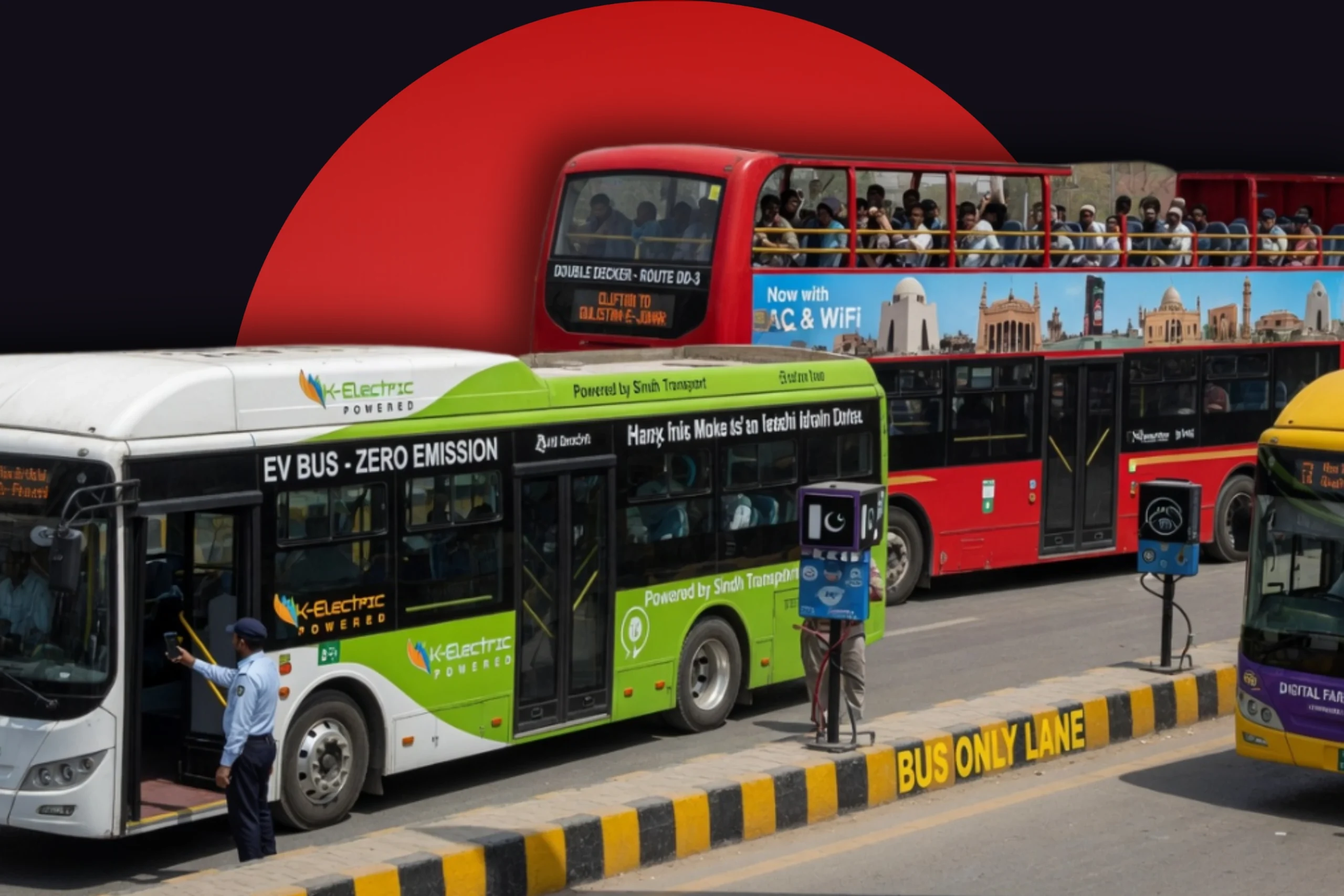
Karachi continued to strengthen its urban transport network during fiscal year 2025-26, expanding electric bus services, introducing double-decker buses and deploying digital fare collection systems as part of efforts to build a modern and sustainable mobility ecosystem.
The government said improving mobility remained central to the city’s economic efficiency and competitiveness, with several large-scale infrastructure and transport initiatives advancing during the year.
The Shahrah-e-Bhutto Expressway became operational, enhancing connectivity between Karachi and the M-9 Motorway and facilitating the movement of around 22,000 vehicles daily. The project, one of the largest urban transport investments in Sindh, has reduced travel times for commuters and commercial traffic while improving access between residential, industrial and logistics corridors.
Authorities also expanded affordable public transport through the People’s Bus Service, which now operates a fleet of 290 buses. Since its launch, the service has carried more than 41 million passengers, with around 125,000 commuters using it every day.
The Pink Bus Service was expanded to 28 buses operating on five routes across the city, while dedicated pink buses on the Green Line corridor serve approximately 1,500 women passengers daily.
To improve women’s mobility and encourage greater economic participation, the government distributed 500 pink electric scooters during the year and plans to provide another 500 scooters under the next phase of the programme.
The shift towards environmentally sustainable transport gained momentum with the introduction of 34 electric minibuses and five double-decker buses. Procurement of 500 additional electric buses is underway under the broader 1,000 EV Bus Programme.
Authorities have also introduced automated fare collection systems across major transport corridors, laying the foundation for an integrated and technology-driven transport network.
Officials said the investments are aimed at improving access to employment, education and public services while supporting the long-term growth of Pakistan’s largest city.