
Salaried Class Pays Rs630bn Tax vs Rs278bn by Real Estate Sector
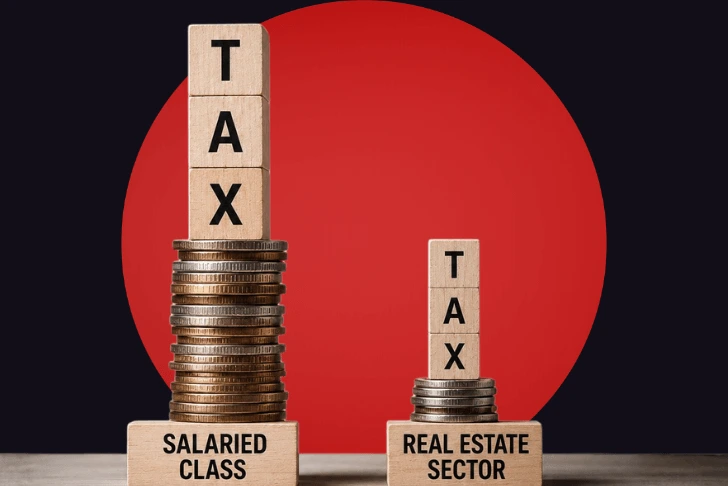
ISLAMABAD: The latest federal budget has extended significantly more tax relief to the real estate sector than to salaried income earners. Property deals stand to benefit from Rs115 billion in concessions compared with Rs52 billion for wage earners.
This occurs even though salaried taxpayers contributed 127 percent more in income tax during the just-ended fiscal year. The disparity has drawn attention to questions of tax equity and resource allocation.
Property Sector Gains Major Rate Cuts
Real estate received substantial concessions on both sale and purchase transactions. On sales, previous multiple slabs were consolidated into one flat rate of 2.75 percent against an earlier maximum of 5.5 percent.
The government also reduced the withholding tax rate on property purchases from 2.5 percent to 1.25 percent. This marks the second consecutive year of cuts on the purchase side.
These measures are projected to deliver Rs115 billion in relief to the sector. Earlier provisional data showed real estate had generated Rs278 billion in withholding tax revenue last year, up 17 percent from the prior period.
The relief package reverses the tighter stance adopted toward real estate over the previous two years. Officials expect the changes to ease transaction costs and support activity in the property market.
Policy Reversal Raises Questions on Investment Direction
The government had earlier used higher rates to discourage large-scale movement of funds into speculative real estate. The new concessions signal a clear change in that approach.
Observers warn that easier tax treatment could pull capital back into unproductive or speculative channels instead of supporting broader economic activity. Salaried taxpayers, by contrast, received more limited adjustments despite their larger overall contribution.
Salaried Relief and Broader Tax Measures
The salaried relief package included slab revisions and an increase in the threshold for the highest tax rate. Its aggregate annual impact stands at roughly Rs52 billion according to official briefings.
Finance Secretary Imdadullah Bosal had outlined these measures to the parliamentary finance committee. The overall budget approach appears to prioritise relief for asset-based sectors over direct wage earners in the current cycle.
Additional steps such as optional fixed-tax schemes for retailers were also notified, offering lower compliance burdens in exchange for a small percentage of turnover. These moves form part of a wider effort to ease the tax load on non-salaried segments.