World Bank Support to Strengthen Pakistan’s Electricity Grid for Improved Reliability and Accelerated Clean Energy Growth.

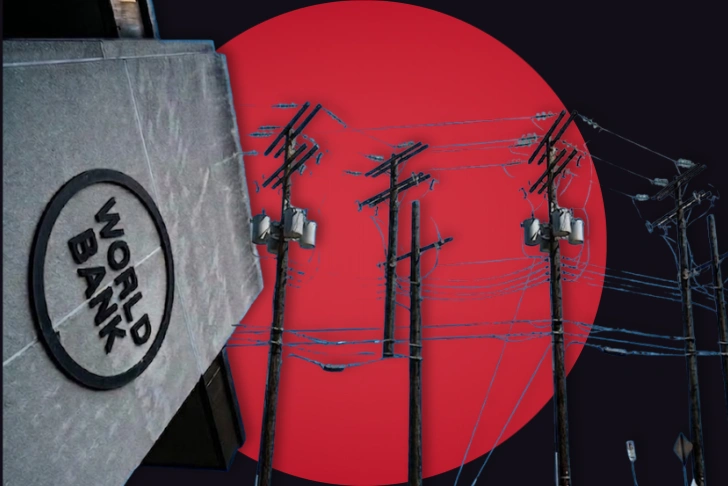
The World Bank’s Board of Executive Directors today approved $375.9 million in financing for Pakistan’s Grid Stability Enhancement Project. The initiative aims to strengthen the national power transmission network under the Boosting Energy Security through Transmission in Pakistan (BEST-PAK) Multiphase Programmatic Approach (MPA).
The project is the first phase of a 10-year program designed to help Pakistan modernize its electricity transmission network, reduce power outages, and bring more clean energy to homes, businesses, and industries.
Linking Grid Resilience to Economic Stability
“Pakistan’s energy challenges are deeply interconnected with its broader economic stability,” said Bolormaa Amgaabazar, World Bank Country Director for Pakistan. “By investing in advanced technologies for more resilient transmission infrastructure, this project will contribute to reducing electricity costs, bring more renewable energy onto the grid, and lay the groundwork for a power sector that works better for households, businesses, and industries.”
Pakistan’s electricity network has long struggled with grid instability and transmission bottlenecks that limit the delivery of reliable power, leaving clean energy generation underutilized. These constraints affect millions of citizens through frequent outages, higher electricity costs, and lost economic opportunities.
Unlocking Renewable Energy Infrastructure
The project will install advanced equipment to stabilize the transmission grid and improve the flow of electricity at key substations. Upgrades include:
- Static Synchronous Compensators (STATCOMs) at three major 500 kV substations.
- Fixed reactors and capacitor banks across 26 grid substations.
These technical enhancements will help bring 640 MW of currently curtailed wind energy onto the grid, enabling the full use of 1,840 MW of wind capacity in southern Pakistan by moving power to major demand centers. It will also support the integration of approximately 491 MW of planned private sector-led renewable energy projects.
Together, these improvements will help Pakistan move toward its national commitment of achieving 60% renewable energy in its electricity mix by 2030, in line with the country’s Nationally Determined Contribution under the Paris Agreement. Over its lifetime, the project is expected to avoid approximately 832,500 tons of $CO_2$ emissions each year, or more than 20.8 million tons cumulatively over 25 years.
Institutional Reforms and Climate-Resilient Engineering
Waleed Saleh Alsuraih, Lead Energy Specialist for the World Bank’s BEST‑PAK program, noted that the initiative unlocks a pathway to large-scale clean energy deployment and a modern, commercially oriented transmission sector, creating conditions for future private capital participation.
The project also advances the government’s ongoing transmission-sector reform agenda, centered on restructuring the National Transmission & Dispatch Company (NTDC) into specialized successor entities. This restructuring is designed to strengthen governance, accountability, and the long-term sustainability of the power sector.
Furthermore, because Pakistan remains highly exposed to climate-related risks like severe flooding and extreme heat, all new installations must meet strict climate-resilient specifications. This includes constructing elevated platforms above ground to mitigate flood exposure and using heavy equipment designed to operate seamlessly in temperatures of up to 55°C.
 Pakistan
 Pakistan
 Pakistan