PCDMA Slams 50% Domestic Sale Rule as Legal Cover for Concession Misuse.
Listen3 min
Read aloud by your device’s built-in synthetic voice, not a recording. Needs a browser that can read aloud.
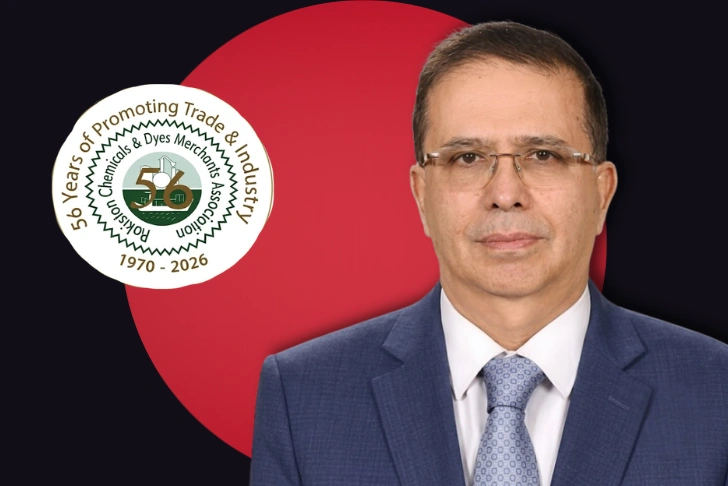
The Pakistan Chemicals & Dyes Merchants Association (PCDMA) has expressed serious reservations over the federal government’s decision to allow manufacturers to sell up to 50% of imported raw materials in the local market without value addition. The association argues that the measure effectively legitimizes the widespread misuse of export-related industrial concessions.
In an official statement, PCDMA Chairman Salim Valimuhammad declared that raw materials imported under concessionary tax and duty schemes—meant exclusively for export-oriented manufacturing—should under no circumstances be allowed to enter the domestic retail market.
A Threat to Export Facilitation Objectives
The contentious provision was introduced into the Sales Tax Act through the recent federal budget. By permitting manufacturers to sell up to half of their imported raw materials without any processing, the policy runs completely contrary to the primary objectives of export facilitation, according to the association.
Instead of curbing operational abuse, critics argue the framework grants legal cover to the diversion of concessionary imports into the local market. This structural loophole directly undermines genuine commercial importers who are legally required to pay the full spectrum of applicable taxes, customs duties, and statutory levies.
Calls for Complete Prohibition and FBR Crackdown
“Raw materials imported under export incentive schemes must be used solely for value addition and subsequent exports,” stated PCDMA Chairman Salim Valimuhammad. “Allowing even 50% of such imports to be sold domestically defeats the purpose of these incentives and creates an uneven playing field.”
Mr. Valimuhammad maintained that the issue is not the specific percentage cap allowed for resale, but the regulatory principle itself. He urged the federal government to replace the 50% resale allowance with a complete, unconditional prohibition on the domestic sale of concessionary imported materials. Furthermore, he called upon the Federal Board of Revenue (FBR) to launch an impartial, nationwide crackdown against industrial units misusing these concessions under the guise of manufacturing.
Resolving Tax Disparities for Fair Competition
The PCDMA chief highlighted that a long-standing disparity in tax treatment between commercial importers and industrial manufacturers has severely distorted competition within Pakistan’s chemicals and dyes sector.
While commercial importers supplying vital raw materials to small and medium enterprises (SMEs) are forced to pay higher withholding tax and value-added tax (VAT) at the import stage, certain industrial units continue to exploit concessionary imports to dump un-processed consignments locally. This practice deprives the national exchequer of revenue and harms compliant traders.
Rejecting the government’s argument that a 50% cap will successfully regulate the issue, the PCDMA stressed that sustainable economic reform can only be achieved by enforcing a completely uniform import tax regime. A level playing field will eliminate current tax distortions, ensure equal business opportunities, stabilize the supply chain for local SMEs, and promote fair market competition across the documented economy.