UNESCO Pakistan Announces Major Regional Initiative under International Decade of Sciences

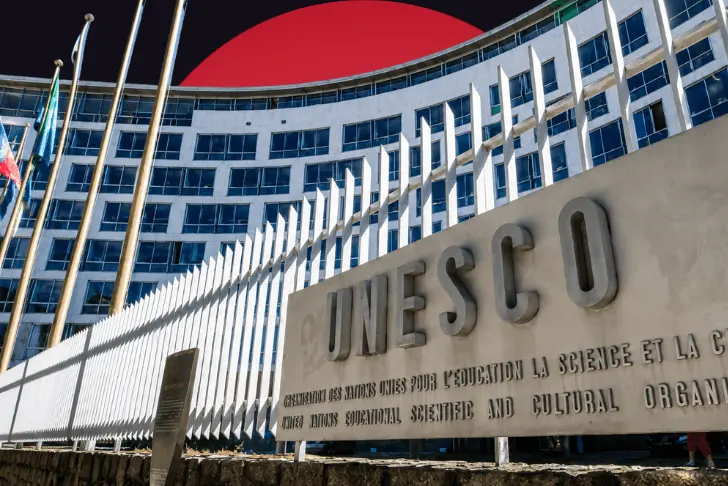
Paris, 15 July 2026 – UNESCO today opens the 2026 Global Conference of the International Decade of Sciences for Sustainable Development (IDSSD), with the release of new data revealing both the scale of scientific mobilization over the past two years, as well as the persistent divides that threaten to leave developing nations behind. The Global Conference will bring together over 800 ministers, scientists, and leaders in Paris to take stock of the state of global science and its contribution to the Sustainable Development Goals. Follow the 2-day Global Conference via live webcast here: UNESCO – Live Event.
New UNESCO data available here:
First Global Report of the International Decade of Sciences for Sustainable Development
The Science Decade is harnessing the full spectrum of sciences to address compounding global crises such as climate disruption, inequality and the governance of emerging technologies like AI and quantum science. Launched today, its Global Report assesses the first two years into the Decade, drawing on data from 397 endorsed scientific initiatives across 79 countries. It documents an unprecedented response from the global scientific community: USD 50 million in confirmed funding mobilized, and projects supporting all 17 Sustainable Development Goals.
Yet the same data exposes a sharp imbalance. Africa accounts for less than 10% of the Decade’s initiatives despite representing 17.5% of the world’s population. Meanwhile among participating initiatives, 40% identified coordination rather than funding as their primary barrier, pointing to a governance gap that money alone cannot close.
Speaking at the event UNESCO Director-General Dr. Khaled El-Enany highlighted that
“The world is not lacking scientific knowledge — what we need now are stronger systems to put that knowledge to work for people and the planet. Two years into the Science Decade, scientists across the world have mobilized with remarkable energy. Governments must now turn this momentum into policies, budgets and measurable impact – with UNESCO’s support.”
The report identifies five structural reforms to get the SDGs back on track:
Reform how research is rewarded from the current “publish or perish” culture;
Expand equitable access to scientific infrastructure and knowledge, allowing all countries to participate and benefit;
Create direct bridges between scientists and decision-makers to ensure research remains responsive to society’s needs;
Rebuild public trust in science through integrity, inclusion and scientific literacy
Responsibly govern new technologies, including AI, before they outpace our ability to steer them.
Open science: closing the gap from policy to implementation
New UNESCO data also reveals how 81 countries have implemented UNESCO’s Recommendation on Open Science since its adoption in 2021. The findings show that 60% of open science policies adopted over the past 5 years explicitly reference the Recommendation, showing proof that this instrument is directly shaping how governments design science policy.
Yet progress remains uneven: while 79% of governments report having an open science policy framework, only 41% actually have a plan in place to implement it, and just one in three has a monitoring mechanism to ensure these policies are reaching their goal of making scientific research more accessible.
Science for the next generation
On the sidelines of the conference, UNESCO and the AXA Foundation for Human Progress have launched Next Generations, a photo exhibition showcasing eleven outstanding young researchers from around the world and the stories behind their work, a reminder that the scientists who will carry the next decade of discovery are already at work.
Under the theme Science in Action: Charting a Sustainable and Equitable Future for All, the Global conference will tackle the most pressing challenges to close the gap between scientific research and the decisions that affect people’s lives, including: reducing global science divides between North and South, and between men and women, translating open science commitments into practice, and rebuilding public trust in science.
UNESCO Pakistan Office, in collaboration with the Commission on Science and Technology for Sustainable Development in the South (COMSATS) and the ECO Science Foundation (ECOSF), is planning to launch a year-long regional webinar series on Science, Ethics and Innovation under the framework of the International Decade of Sciences for Sustainable Development (2024–2033). The initiative will serve as a platform for policymakers, researchers, academics and scientific institutions across the region to exchange knowledge, strengthen science diplomacy and promote South-South cooperation. Through eleven thematic webinars covering areas such as bioethics, open science, artificial intelligence, neurotechnology, science policy, STEM education, quantum science and women in science, the series will showcase UNESCO’s global normative instruments and flagship initiatives while fostering ethical, inclusive and responsible approaches to science, technology and innovation in support of the Sustainable Development Goals.
 Pakistan
 Pakistan
 Pakistan