Iran Strikes US Bases in Kuwait and Jordan in Direct Retaliation.

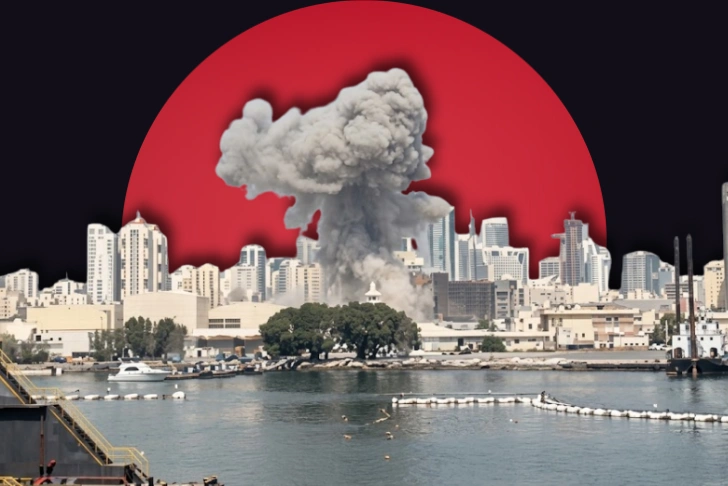
Tensions between the United States and Iran have reached a dangerous flashpoint with a series of direct, heavy retaliatory strikes. In response to recent US military operations targeting Iranian coastal and domestic military sites, Iran has launched major drone and missile waves targeting key US military facilities in neighboring Gulf and Middle Eastern states.
The military escalation has significantly raised security threats across the region, putting neighboring defense forces on high alert.
IRGC Claims Precision Hits on Regional Bases
According to official Iranian state media statements, the Islamic Revolutionary Guard Corps (IRGC) and the Iranian Army focused their operations on heavily utilized US logistical and operational hubs:
- Jordan: Suicide (kamikaze) drones and ballistic missiles targeted the Prince Hassan Air Base and Al-Azraq Air Base. Iranian sources claimed precision hits on communication systems, fuel storage depots, ammunition warehouses, and hangars housing high-value MQ-9 Reaper drones and F/A-18 fighter jets. The Jordanian military confirmed activating its air defense systems, successfully intercepting several incoming missiles.
- Kuwait: The Ali Al Salem Air Base faced extensive drone and missile assaults. The IRGC claimed the strikes successfully targeted a C-RAM early warning radar system, a Patriot air defense battery, and a US troop assembly point. Kuwaiti air defenses responded to the hostile drone threats, with explosions reported due to interception operations.
- Bahrain: Drone strikes were also launched against US military installations at the Sheikh Isa Air Base, triggering sirens and air defense activity.
While the IRGC and Iranian state television released footage claiming widespread destruction of command centers and launchers, US Central Command (CENTCOM) and local regional officials reported that many of the incoming projectiles were successfully intercepted, resulting in limited structural damage.
The Trigger: Escalation Over the Strait of Hormuz
The direct military confrontation follows a series of intensive, US-led precision strikes designed to degrade Iran’s capability to target commercial shipping lanes.
The US strikes were initiated after Iranian naval forces intercepted and detained commercial vessels transiting the Strait of Hormuz, accusing them of violating maritime laws and turning off tracking systems.
The ongoing cycle of attack and counter-attack threatens to fully draw in neighboring Gulf states, some of whom have accused Washington of utilizing their territories to launch operations against Iran.
Severe Economic Implications for Energy Markets
The military flare-up has put massive pressure on global energy supply chains, with maritime traffic through the critical Strait of Hormuz transit chokepoint already experiencing sharp declines.
Global oil benchmarks have reacted with immediate volatility. For emerging economies like Pakistan, which relies heavily on Gulf stability for its crude oil imports and essential worker remittances, a prolonged closure of sea lanes could trigger severe knock-on effects. Local policymakers are already bracing for higher landed energy costs, which could further fuel imported inflation.
Despite ongoing diplomatic backchannels, formal de-escalation efforts appear heavily stalled. Both Washington and Tehran continue to signal their readiness for a prolonged, multi-phased conflict if red lines are crossed.
 Global
 Global
 Global