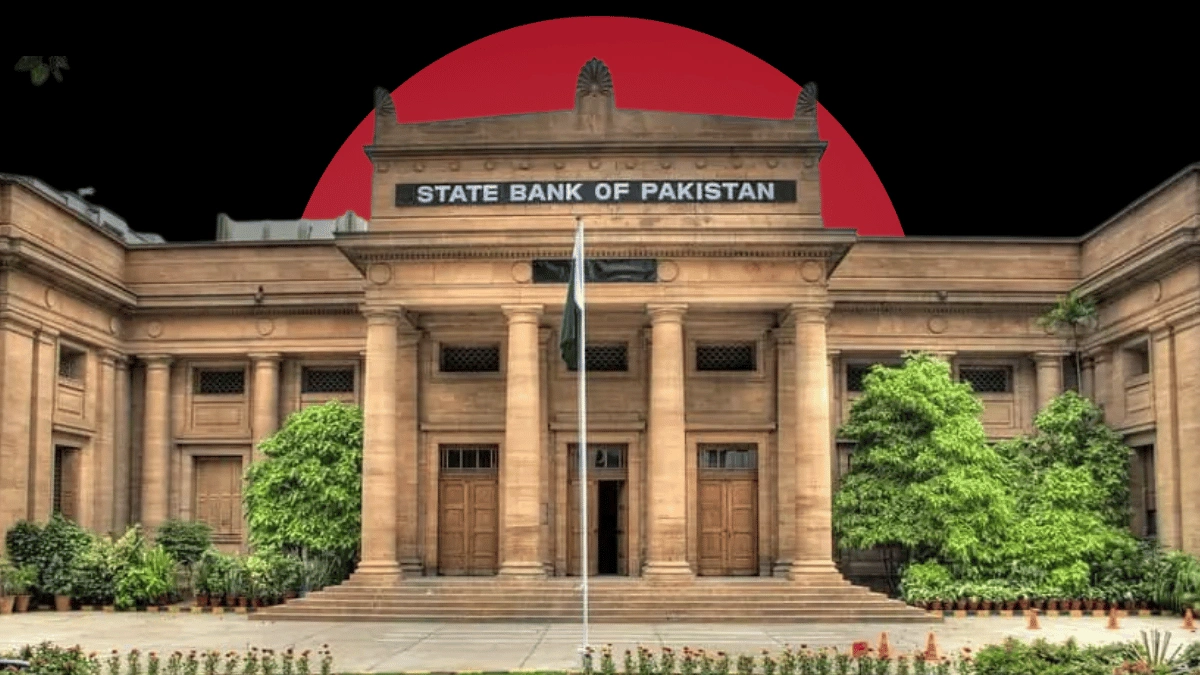
Pakistan Banking Sector Remains Strong In First Half Of 2026: SBP.
✧ GENERATE BRIEFING +
Pakistan’s banking sector exhibited firm resilience through the first half of calendar year 2026, underscored by balance sheet expansion, improved asset quality, and robust capital buffers, according to the State Bank of Pakistan’s (SBP) latest review. Total banking assets grew 9.1% during H1CY26, propelled primarily by heightened investments in government securities and an uptick in public-private credit disbursement. SME and mortgage lending both gained healthy momentum, supported by targeted housing finance initiatives, while bank deposits swelled by an impressive Rs3.673 trillion over the six-month period.Credit risk metrics also showed notable recovery: the non-performing loans (NPL) ratio dropped to 5.5% in June 2026 (down from 6.1% in December 2025), and the provisioning coverage ratio strengthened to 110.2%. Although profitability experienced a mild moderation with Return on Assets (RoA) slipping to 1.1% and Return on Equity (RoE) adjusting to 19% the sector maintained a Capital Adequacy Ratio (CAR) of 19.6%.
Pakistan’s banking sector maintained its resilience during the first half of calendar year 2026, with the overall balance sheet expanding and credit quality improving, according to the State Bank of Pakistan’s (SBP) latest review.
The banking sector’s balance sheet grew 9.1% during H1CY26, mainly due to higher investments in government securities. Bank lending also increased across both public and private-sector segments during the period.
The SBP said financing to small and medium-sized enterprises continued to rise, while mortgage lending gained momentum, helped largely by the government’s subsidised housing finance programme.
On the funding side, banks mobilised an additional Rs3.673 trillion in deposits during the six-month period, strengthening their funding base and supporting continued expansion of banking activities.
Credit risk also improved. The ratio of non-performing loans to total advances declined to 5.5% in June 2026 from 6.1% at the end of December 2025. Meanwhile, the provisioning coverage ratio increased to 110.2% from 107.7%, indicating stronger protection against potential credit losses.
However, banking-sector profitability indicators weakened moderately. Return on assets fell to 1.1% in June from 1.3% a year earlier, while return on equity declined to 19% from 21.3%.
Despite these pressures, the sector maintained a strong capital position. The capital adequacy ratio stood at 19.6%, while SBP stress tests indicated that banks, including large systemically important institutions, would remain solvent even under severe shocks over the next two years.
The SBP also identified commodity-price volatility, particularly oil prices, and global geopolitical tensions as major risks. Equity-market stress increased during the period because of Middle East developments, although foreign exchange and money markets remained comparatively stable. Overall, respondents to the central bank’s systemic risk survey continued to express confidence in Pakistan’s financial-system stability.