
US 10-Year Treasury Yield Crosses 5% As Oil Prices Boost Inflation Bets.
✧ GENERATE BRIEFING +
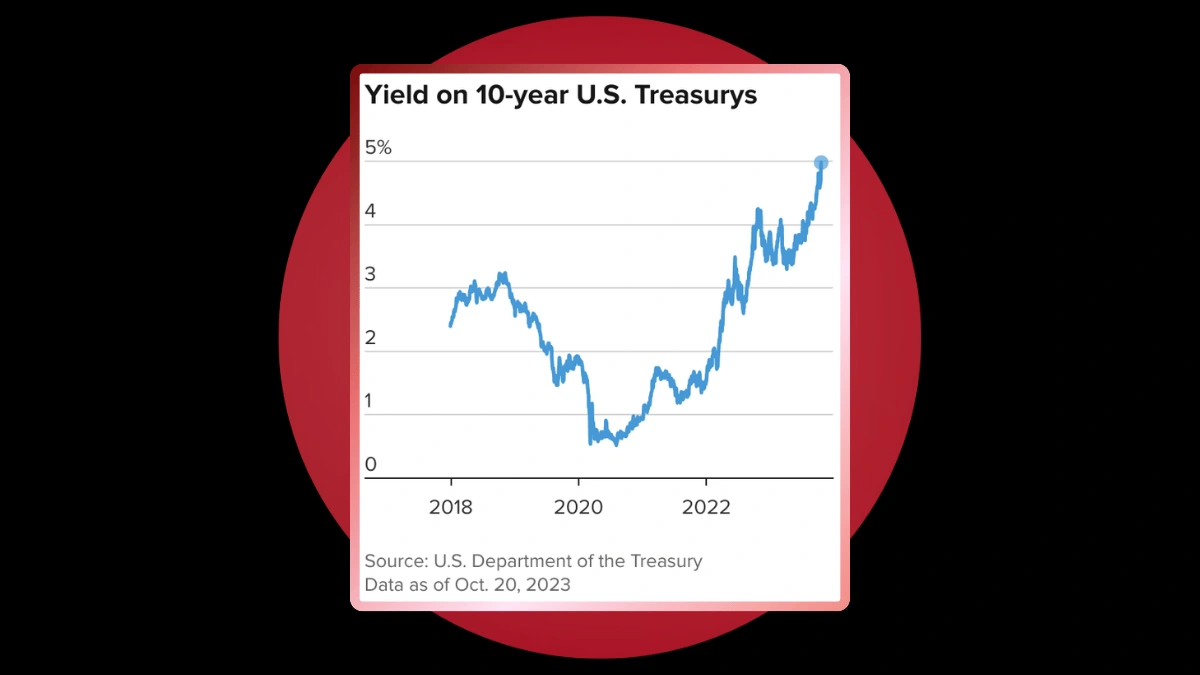
The yield on the benchmark 10-year US Treasury note breached the 5% threshold on Monday, rising 2.89 basis points to hit 5.004% its highest level since October 2023. Driven primarily by a sharp, geopolitical rally in crude oil prices above $100 per barrel, the yield spike highlights mounting fears that persistent energy-driven inflation will force global central banks and the Federal Reserve to keep interest rates elevated for longer. Crossing the 5% mark signals a critical inflection point for broader asset classes. As the foundational benchmark for fixed income, mortgages, and corporate credit, rising yields increase overall borrowing costs while dimming risk-on sentiment for equities particularly high-valuation technology and growth stocks. The surge forms part of a synchronized global bond sell-off as market participants brace for the Federal Reserve’s upcoming policy decision on September 15–16.
The yield on the benchmark 10-year U.S. Treasury note briefly moved above 5% on Monday, reaching its highest level since October 2023 as rising oil prices and renewed inflation concerns pushed investors to reassess the outlook for U.S. interest rates.
The yield rose 2.89 basis points to 5.004%, crossing the closely watched 5% threshold for the first time since 2023. The move highlights growing pressure in the U.S. bond market as investors expect inflation to remain elevated for longer.
A major driver has been the sharp increase in oil prices amid escalating tensions in the Middle East. Higher energy costs could feed into consumer prices, making it more difficult for the Federal Reserve to ease monetary policy and raising expectations that interest rates may remain higher for longer.
The rise in Treasury yields is significant for financial markets because the 10-year Treasury is a key benchmark for borrowing costs across the U.S. economy. Higher yields can increase financing costs for businesses and households while making government bonds relatively more attractive compared with stocks.
Analysts have warned that a sustained move above 5% could put pressure on equity valuations, particularly companies whose valuations depend heavily on future earnings. The increase also comes as investors assess the impact of higher oil prices on inflation and the Federal Reserve’s policy outlook.
The move follows a broader global bond sell-off. The U.S. 10-year yield had already climbed close to 5% last week, reaching 4.979%, while yields on other major government bonds also moved higher amid concerns over inflation and monetary tightening.
The 5% level is therefore being closely watched by investors as a potential turning point for U.S. financial markets. If yields remain elevated, the resulting increase in borrowing costs could affect corporate investment, mortgages, government financing and the relative attractiveness of equities.