
Pakistan developing National Private Equity Framework to attract long-term capital
Listen3 min
Read aloud by your device’s built-in synthetic voice, not a recording. Needs a browser that can read aloud.
✧ GENERATE BRIEFING
Pakistan is developing a National Private Equity Framework to mobilize institutional capital and broaden long-term financing options for businesses and projects, Finance Minister Muhammad Aurangzeb announced at the J.P. Morgan Emerging and Frontier Markets Opportunities Conference in London. Designed to transition the economy from stabilization toward investment-driven growth, the initiative addresses regulatory, legal, and tax issues—including tax neutrality at the fund level and clear valuation mechanisms. A government committee has targeted mergers, restructuring, privatization, and SMEs, drawing interest from 55 global investment funds. Prime Minister Shehbaz Sharif previously directed roadmap preparations in August targeting minerals, agriculture, livestock, energy, and IT, complementing broader efforts to attract domestic and international institutional capital.
Pakistan is developing a National Private Equity Framework aimed at mobilising institutional capital into businesses and projects as the government seeks to increase the role of private investment in the country’s next phase of economic growth, Finance Minister Muhammad Aurangzeb said.
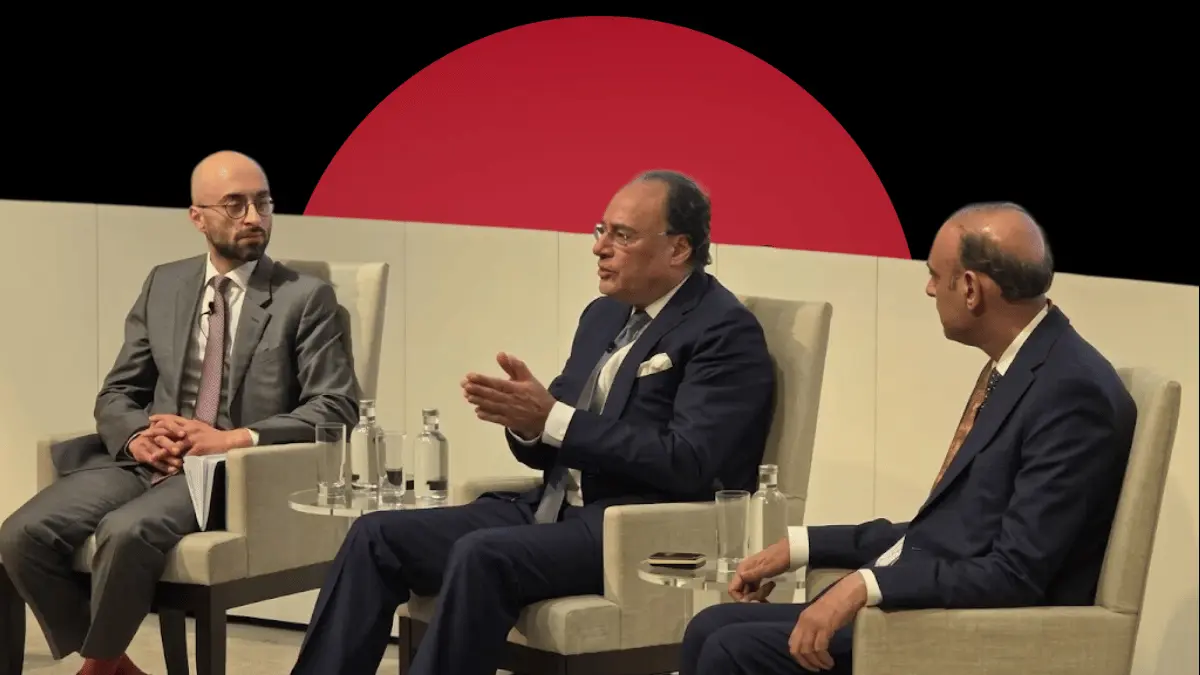
Speaking at the J.P. Morgan Emerging and Frontier Markets Opportunities Conference in London, Aurangzeb said the framework would help strengthen Pakistan’s private equity and venture capital ecosystem and broaden channels for long-term financing.
The development comes as the government looks to move the economy from stabilisation towards growth driven by investment, productivity, exports and private-sector activity. The finance minister said public balance sheets alone could not finance Pakistan’s next phase of economic expansion, making greater mobilisation of private capital necessary.
Work on the framework is already under way. A government committee has been examining regulatory, taxation, institutional investment and legal issues, including measures to facilitate investment, repatriation and exit by institutional investors. The State Bank of Pakistan is also considering mechanisms to enable greater participation by banks, development finance institutions, insurance companies and pension funds.
Tax treatment is another key component. Officials have discussed tax neutrality for private equity structures, aiming to avoid an additional layer of taxation at the fund level while maintaining taxation on income earned by ultimate beneficiaries. The committee has also examined capital gains taxation and safeguards against undervaluation and tax arbitrage.
The proposed framework is also expected to establish clearer valuation and regulatory mechanisms for private-company transactions. The government has stressed the need for transparent and credible valuation practices while maintaining safeguards against misuse.
Pakistan is also seeking to expand its pipeline of investable businesses and projects. Earlier work by the government committee identified mergers and acquisitions, restructuring, privatisation, SMEs and growth-oriented businesses as areas where private equity could provide long-term capital.
The initiative comes amid renewed interest from international investors. At the J.P. Morgan conference, 55 global investment funds held meetings with Pakistan’s delegation, focusing on the country’s economic direction, investment opportunities and reform programme.
Prime Minister Shehbaz Sharif had also directed authorities in August to prepare a roadmap for establishing a private equity fund, identifying minerals, agriculture, livestock, energy and information technology among sectors with significant investment potential.
The government is now working to consolidate the regulatory, taxation and legal recommendations into a national framework. The stated objective is to create a competitive and transparent private equity market capable of attracting both domestic and international institutional capital and complementing traditional bank and capital-market financing

 Investments
 Investments
 Business