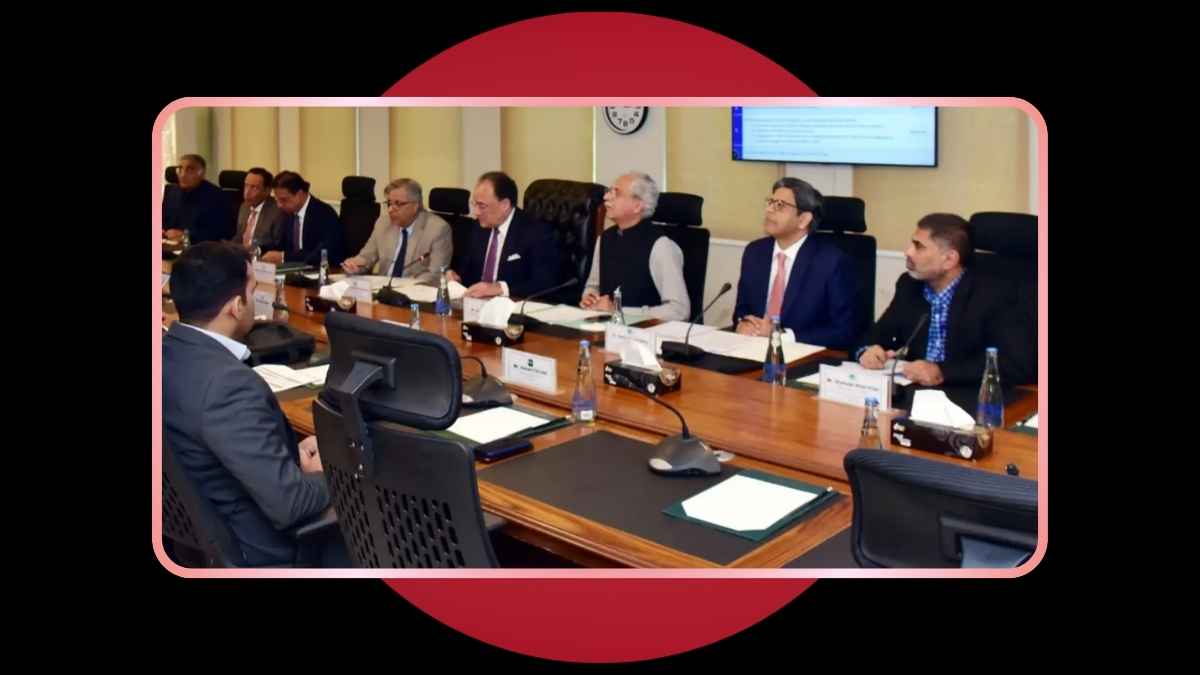
CCP Calls For Greater Competition, Digitalisation To Expand Pakistan’s Insurance Sector.
Listen3 min
Read aloud by your device’s built-in synthetic voice, not a recording. Needs a browser that can read aloud.

✧ GENERATE BRIEFING
The CCP’s Competition Consultative Group meeting stressed that boosting digitalisation and competition can lift Pakistan's 0.7% insurance GDP penetration. The Competition Commission of Pakistan (CCP) convened a meeting of the Competition Consultative Group (CCG) in Islamabad, focusing on strategies to overhaul and scale the country’s insurance sector. Chaired by CCP Chairman Farid Ahmad Tarar, the session highlighted that Pakistan's insurance penetration remains critically low at 0.7% of GDP with an insurance density of roughly $12 per capita.Discussions underscored that unlocking the sector's growth potential requires dismantling market concentration, tackling entry barriers, improving transparency in claims handling, and accelerating digitalization. Industry leaders, regulators, and consumer advocates evaluated key structural reforms including the forthcoming Insurance Bill, 2026, expansion into agricultural, SME, and microinsurance segments, and the adoption of modern, data-driven risk frameworks.
The Competition Commission of Pakistan (CCP) held a meeting of the Competition Consultative Group (CCG) on “Strengthening Competition in Pakistan’s Insurance Sector: Challenges, Opportunities and the Way Forward.” The CCG meeting called for greater competition, digitalisation, improved claims handling and wider market access to unlock the potential of Pakistan’s insurance industry, where insurance penetration remains only at 0.7 percent of GDP and insurance density of around US$12 per capita.
In his opening remarks, Chairman CCP Farid Ahmad Tarar said insurance plays an important role in managing risks, mobilising long-term savings and supporting economic activity. He said Pakistan’s low insurance penetration also represents considerable room for growth, and greater competition could encourage innovation, improve service quality and widen consumer choice.
Key Structural Challenges Identified
A CCP presentation showed that Pakistan has 44 insurers, including 36 conventional insurers, seven Takaful operators and one reinsurer, with around 10.4 million policies. The regulatory review identified several core bottlenecks hindering market expansion:
- Market Concentration & Entry Barriers: Heavy reliance on bancassurance channels and restrictive legacy structures.
- Information Asymmetry & Low Awareness: Limited financial literacy across retail and rural segments.
- Operational Friction: Frequent claims disputes, procedural delays, and constrained technological adoption.
Presenting the regulator’s perspective, Waseem Khan, Director/HOD at the SECP’s Insurance Division, emphasized ongoing initiatives such as enhanced digitalisation, effective enforcement of mandatory insurance lines, agricultural insurance expansion, and a risk-based solvency framework, alongside discussions surrounding the Insurance Bill, 2026.
Expert Panels and Strategic Roadmap
High-level panel discussions brought together chief executives from leading insurance firms—including EFU General, Jubilee General, IGI General, UBL Insurers, State Life, and Adamjee Life—alongside institutional stakeholders like the SDPI and the Federal Insurance Ombudsman.
The deliberations mapped out a clear path forward for the industry:
- Untapped Growth Verticals: Expanding microinsurance, health coverage, Takaful, and specialized policies for small and medium-sized enterprises (SMEs) and agriculture.
- End-to-End Digitalization: Leveraging data infrastructure for automated underwriting, rapid fraud detection, seamless premium payments, and transparent claims settlement.
- Consumer Protection: Streamlining complaint redressal mechanisms, ensuring responsible product selling, and clarifying disclosures.
Concluding the session, Chairman CCP reiterated that the insights gathered will guide targeted competition advocacy and regulatory interventions, ensuring a competitive, efficient market that delivers tangible value to policyholders.