EU Urges Pakistan To Focus On GSP+ Implementation Over Legislation
Listen3 min
Read aloud by your device’s built-in synthetic voice, not a recording. Needs a browser that can read aloud.
✧ GENERATE BRIEFING
The European Union (EU) Ambassador to Pakistan, Raimundas Karoblis, met with the leadership of the Pakistan Textile Council (PTC) in Karachi on October 21, 2026, warning that maintaining GSP+ duty-free market access requires verifiable, ground-level compliance rather than procedural legislation. The envoy emphasized that while no new standards are being added, the EU expects measurable progress on human rights, labor laws, minority protection, and the rule of law ahead of the new GSP scheme taking effect on January 1, 2027. Key compliance metrics, trade figures, and industry risks include: Trade Volume & Duty Savings: Pakistan’s exports to the EU under the GSP+ framework reached $8.96 billion in FY2025–26. In 2024, Pakistani exporters shipped €7.5 billion in GSP+-eligible goods, realizing an estimated €732 million in tariff savings. Transition Framework (2027–2034): The revised EU GSP framework comes into effect on January 1, 2027. Existing beneficiaries must formally reapply under transitional arrangements, backed by a credible national action plan with specific implementation timelines.
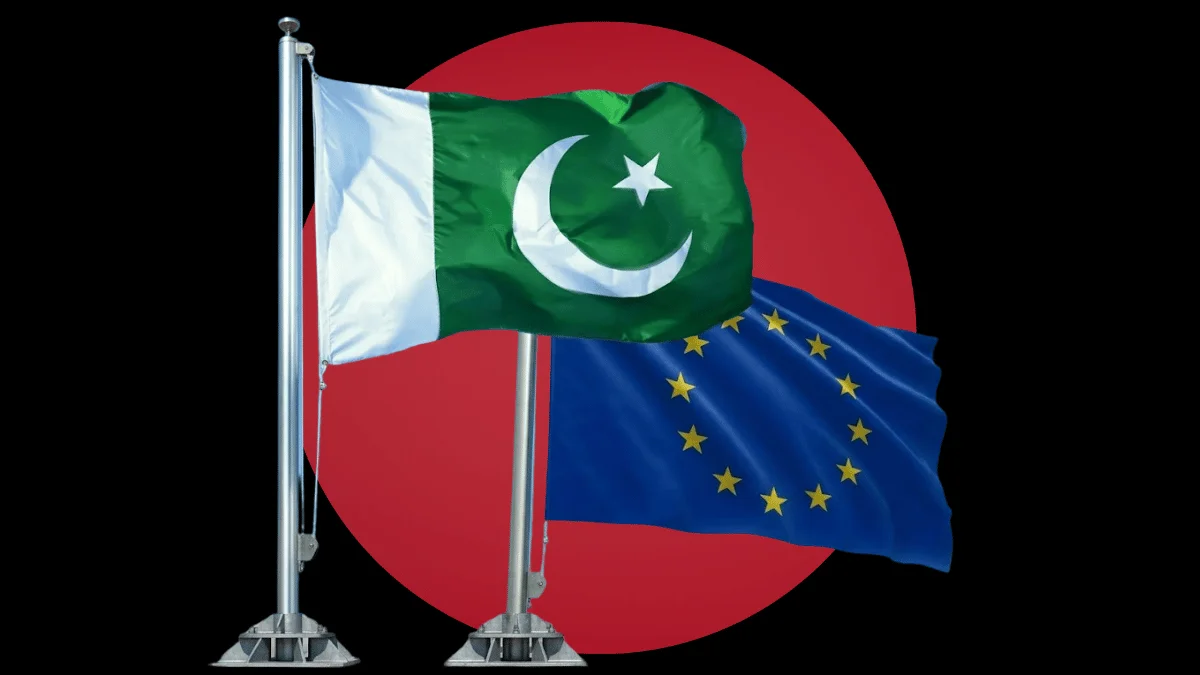
The European Union has called on Pakistan to demonstrate tangible progress in fulfilling its commitments under the Generalised Scheme of Preferences Plus (GSP+), emphasising effective implementation over the passage of legislation.
EU Ambassador to Pakistan Raimundas Karoblis conveyed the message during a meeting with the Pakistan Textile Council (PTC) in Karachi on October 21, 2026. He said the EU was not introducing new standards under the scheme but expected measurable improvements, particularly in human rights and the rule of law.
Economic Significance and FY26 Export Metrics
GSP+ provides eligible developing countries, including Pakistan, with preferential access to the EU market through zero or reduced tariffs on a wide range of products, subject to compliance with 27 international conventions covering human and labour rights, environmental protection and good governance.
Pakistan has benefited from the arrangement since 2014, with textiles and clothing forming a major share of its exports to the European market. According to official data, Pakistan’s exports to the EU stood at $8.96 billion in fiscal year 2025-26.
| Benchmark Metric | Figure / Status |
| FY2025–26 EU Export Volume | $8.96 Billion |
| 2024 GSP+-Eligible Exports | €7.50 Billion |
| Estimated Annual Tariff Savings | €732 Million |
| New GSP Framework Start Date | January 1, 2027 |
Monitoring Report and Key Reform Priorities
The ambassador said the EU would strengthen engagement with Pakistan’s government, initially focusing on short-term improvements and subsequently on a credible action plan containing specific measures, timelines and measurable performance indicators.
The EU’s assessment of Pakistan for the 2023–2025 period, published in July 2026, highlighted areas requiring further progress. These include accountability for human rights violations, action against torture and forced labour, protection of freedom of expression and minorities, addressing violence against women, and improving children’s access to education.
Revised 2027 Framework and Industry Stakeholder Concerns
The EU’s revised GSP framework is scheduled to take effect on January 1, 2027. Existing beneficiaries will operate under transitional arrangements, with Pakistan required to reapply for continuation of its preferential access under the new framework.
The PTC delegation that met the ambassador was led by Chairman Fawad Anwar, alongside Vice Chairman Anees Khawaja, Gul Ahmed CEO Zaki Bashir, Alkaram Towels CEO Kashif Chawla, Naveena Group CEO Asif Riaz, and other industry leaders. Fawad Anwar emphasized that the continuation of GSP+ was essential for Pakistan’s textile and apparel exports, employment, tax contributions, and downstream industrial value chains.
Industry representatives also raised concerns about rising competitive pressure from the pending EU–India Free Trade Agreement, as well as the operational implications of emerging EU regulations regarding product transparency, supply-chain due diligence, and carbon footprint tracking that extend across agricultural inputs.