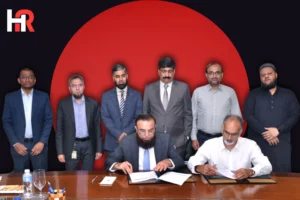
Tech Infrastructure: Hisense Partners with Airlink to Launch Smart Home Appliances in Pakistan.

Hisense Airlink smart home appliances Pakistan
Redefining the landscape of Pakistan’s downstream technology sector, global consumer electronics giant Hisense has officially launched its operations in the country through a landmark industrial partnership with Airlink Communication Limited.
Marking one of the most significant Chinese technological investments in Pakistan to date, the joint venture combines Hisense’s global $30 billion hardware empire with Airlink’s immense domestic manufacturing footprint. This move accelerates the state’s transition from a consumer market into a self-sustaining tech-production center.
Expanding Local Industrialization Frameworks
The strategic rollout brings high-end electronics manufacturing directly to the local consumer grid. The event, attended by top diplomatic figures and industrial captains, signals strong corporate backing for this tech integration.
The foundational pillars of this global-local technology alliance include:
- Advanced Domestic Assembly: Establishing specialized local assembly lines for high-efficiency refrigerators, deep freezers, smart television units, and climate-control air conditioning setups.
- Import Substitution Driven: Substantially reducing national reliance on fully built import units (CBUs), allowing the state to retain critical foreign exchange blocks.
- IoT Ecosystem Integration: Introducing internet-connected, app-controlled smart living environments designed for modern, high-speed cellular and upcoming 5G data environments.
- Job Creation & Skill Transfer: Employing local assembly engineers and introducing international quality-control parameters to step up domestic workforce capacities.
Turning Pakistan Into an Electronics Export Hub
“Pakistan is no longer merely a destination for selling foreign hardware. Our partnership with Hisense establishes a sustainable manufacturing foundation, providing localized supply resilience and building a long-term runway to eventually export premium, locally assembled electronic appliances to regional markets.”
The industrial setup matches the federal government’s broader “Made in Pakistan” manufacturing mandates. By shifting the ecosystem away from trading finished imports toward high-tech component assembly, the joint venture cushions local retailers from global currency variations while offering high-end electronics at highly competitive price tags across all internal economic tiers.
About The Author