Twin Earthquakes Devastate Venezuela, Killing at Least 164 with Thousands Feared Dead.

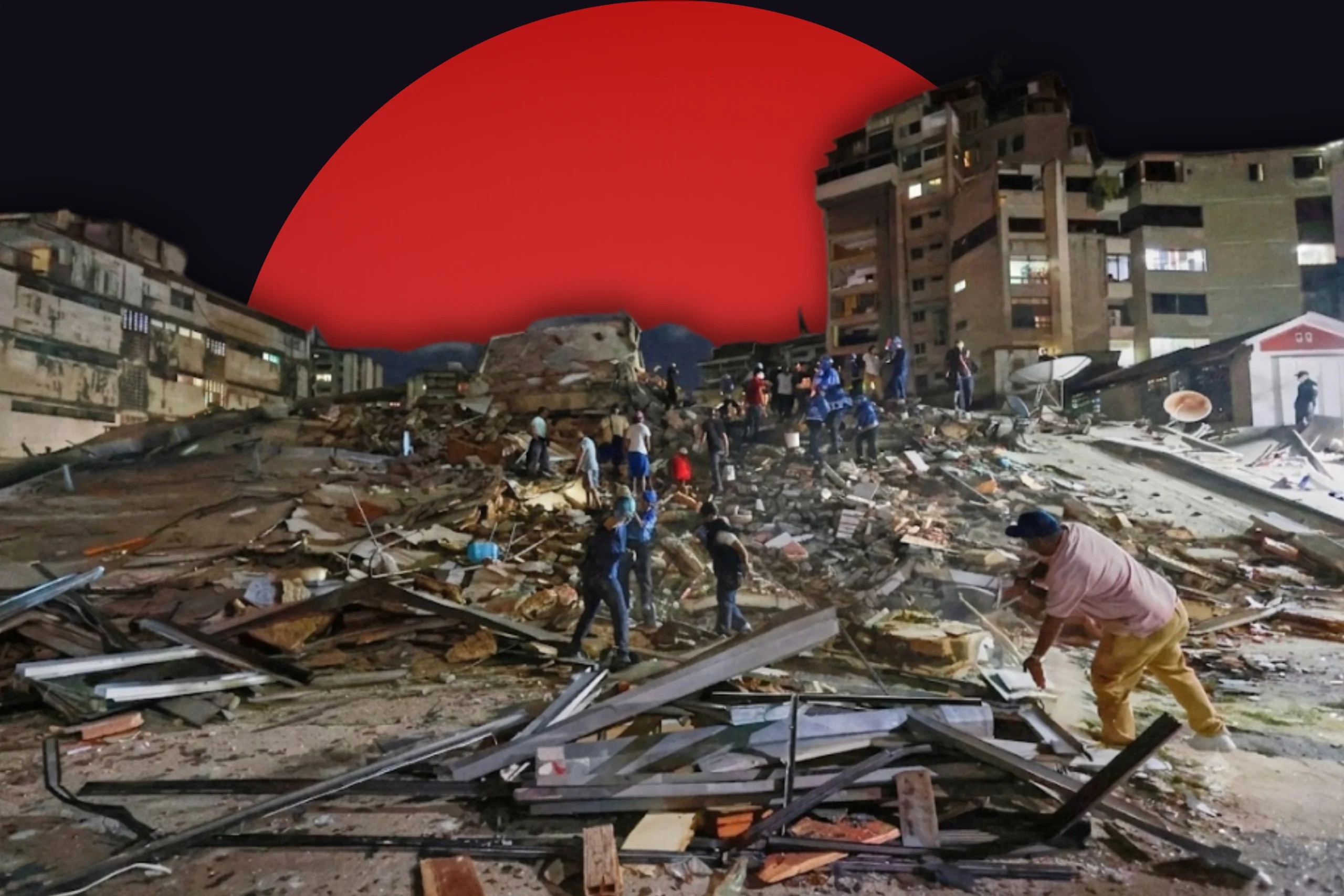
A double seismic catastrophe struck north-central Venezuela on Wednesday evening, collapsing high-rise buildings, trapping hundreds beneath concrete debris, and plunging the nation into a catastrophic state of emergency.
The near-simultaneous tremors—ranking as the most powerful seismic events to hit the South American country in more than a century—struck less than a minute apart, caught families by surprise on a national public holiday, and sparked widespread panic across the capital region.
Twin Shocks Strike in Seconds
According to data compiled by the United States Geological Survey (USGS), the disaster unreeled in two rapid-fire movements centered in the Yaracuy region, west of the community of Morón:
- 18:04 VET: A massive magnitude 7.2 foreshock tears through northwestern and central fault lines at a depth of roughly 20 kilometers.
- 39 Seconds Later: A devastating magnitude 7.5 mainshock strikes the same region at a much shallower, more violent depth of 10 kilometers.
The violent shaking ruptured along a major fault system, sending powerful tremors undulating more than 1,000 miles away into Colombia’s capital of Bogotá, northern Brazil, and across nearby Caribbean islands including Aruba, Bonaire, and Curaçao.
“Like a Horror Movie”: Heavy Collapses in Caracas and La Guaira
Acting President Delcy Rodríguez addressed the nation early Thursday, confirming that at least 164 people have lost their lives and 971 others are severely injured—grim numbers that officials warn will inevitably climb as rescue dogs and heavy machinery dig through the rubble.
The architectural toll in Caracas and neighboring coastal zones is severe. In the upscale Chacao municipality of eastern Caracas, at least three high-rise structures completely collapsed—including a prominent 22-story residential tower in Altamira. Elsewhere across the capital’s southeastern quadrant, columns of thick grey dust rose as dozens of multi-story buildings folded or sustained terminal structural failures.
“Dozens of buildings have collapsed and we are engaged in the arduous task of rescuing the lives that God allows us to save. The state of La Guaira is facing a true tragedy and has become a disaster zone,” declared Acting President Delcy Rodríguez.
The port city of La Guaira, sitting just north of the capital, bore the brunt of the immediate destruction. One major beachfront hotel, Eduard’s Hotel Boutique, was almost entirely leveled. Nearby in Catia La Mar, the Military Academy of the Bolivarian Navy and multiple apartment blocks suffered catastrophic failures.
Seismic Impact Summary
├── Hardest Hit Zones: La Guaira (Disaster Zone) & Greater Caracas
├── Structural Toll: Multiple high-rises down, including 22-story tower in Altamira
└── Transport Infrastructure: Simón Bolívar International Airport closed due to severe terminal damage
Secondary Shocks and Logistics Hurdles
Complicating the grueling search-and-rescue efforts are more than 30 logged aftershocks, which continue to threaten compromised concrete ruins. The local response infrastructure is under immense strain:
- Transport Paralysis: All commercial flights at Simón Bolívar International Airport have been canceled due to structural ceiling collapses and runway damage. The Caracas metro and train grids have been entirely halted.
- Utilities Outage: Main electrical distribution grids and cellular towers are dark across major sectors of Caracas, hampering local communication.
- Industrial Strain: The Morón Petrochemical Complex—the nation’s second-largest operating facility—executed an emergency shutdown following a storage tank leak triggered by the tremors.
A Mass International Aid Mobilization
With predictive modeling from the USGS warning of a high probability that final casualties could scale significantly higher, a coordinated global humanitarian pipeline is snapping into action.
The United Nations aid chief, Tom Fletcher, announced the UN is “fully mobilized” to guide a massive collective relief mission. From Washington, Secretary of State Marco Rubio promised a “big, fast, and effective” whole-of-government response, coordinating U.S. military logistics to airlift medical teams and heavy technical assets. Additional rescue teams and specialized engineering forces have been pledged by Spain, France, Iran, and Turkey.