
ADB President Taps Global Business Leaders to Take on Asia and the Pacific’s Toughest Challenges
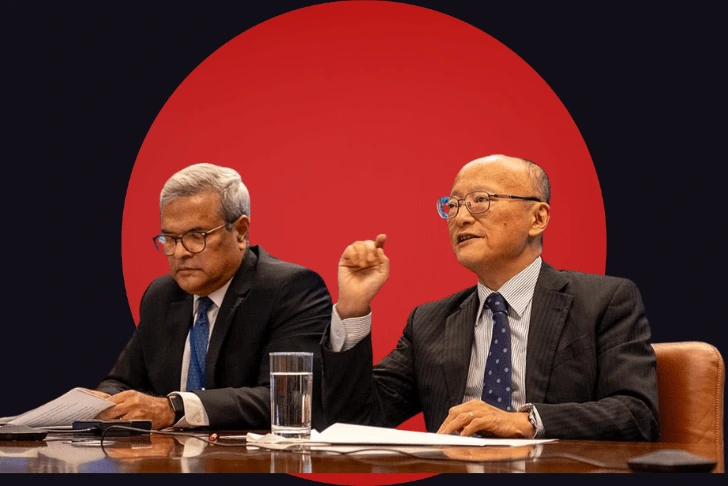
MANILA, PHILIPPINES (3 July 2026) — Asian Development Bank (ADB) President Masato Kanda brought together some of the world’s most influential business leaders to put private sector muscle behind solutions to Asia and the Pacific’s most pressing problems.
“The private sector brings more than financial firepower. It brings innovation, technology, market discipline, and the ability to deliver at speed and scale,” Mr. Kanda said.
ADB’s task is to connect that power and innovation with the region’s greatest needs, from reliable energy and digital connectivity to stronger supply chains and critical minerals. The public sector alone cannot overcome these monumental challenges.
The second meeting of ADB’s High-Level Private Sector Advisory Group brought together senior leaders from global finance, insurance, investment, and industry. Members include BNP Paribas Chairman Jean Lemierre, Franklin Templeton CEO Jenny Johnson, Standard Chartered PLC Group Chair Maria Ramos, Sumitomo Mitsui Banking Corporation President and CEO Akihiro Fukutome, Tata Sons Chairman Natarajan Chandrasekaran, Temasek Holdings CEO Dilhan Pillay Sandrasegara, and Zurich Insurance Group CEO Mario Greco.
Mr. Kanda created the High-Level Private Sector Advisory Group to bring global business expertise into ADB’s push to mobilize more private capital and bring greater technology and efficiency to Asia and the Pacific. The group first met in Davos in January and is advising ADB on how to turn big regional priorities into bankable projects.
He said the work had become more urgent as Asia and the Pacific faces a “new normal” of compounding shocks. He said the conflict in the Middle East, now under a ceasefire, had exposed the vulnerability of economies that depend on long and fragile supply chains.
ADB’s role is to build investable regional platforms that can mobilize private capital at scale, he said, pointing to three initiatives launched at ADB’s 59th Annual Meeting in Samarkand, Uzbekistan, as central to that effort.
These include the Pan-Asia Power Grid Initiative, which aims to mobilize $50 billion by 2035 to connect grids to expand cross-border electricity trade and improve energy access for 200 million people, and the Asia-Pacific Digital Highway, which will mobilize $20 billion by 2035 for fiber networks, submarine cables, and data centers, improving connectivity for 650 million people. The Critical Minerals-to-Manufacturing Financing Partnership Facility will help countries move beyond raw extraction into processing, manufacturing, and recycling.
ADB is a leading multilateral development bank supporting sustainable, inclusive, and resilient growth across Asia and the Pacific. Working with its members and partners to solve complex challenges together, ADB harnesses innovative financial tools and strategic partnerships to transform lives, build quality infrastructure, and safeguard our planet. Founded in 1966, ADB is owned by 69 members—50 from the region.