
Iran Bans Pakistani Mango Treatment Facility Over Pest Contamination & Regulatory Violations.
Listen3 min
Read aloud by your device’s built-in synthetic voice, not a recording. Needs a browser that can read aloud.
✧ GENERATE BRIEFING
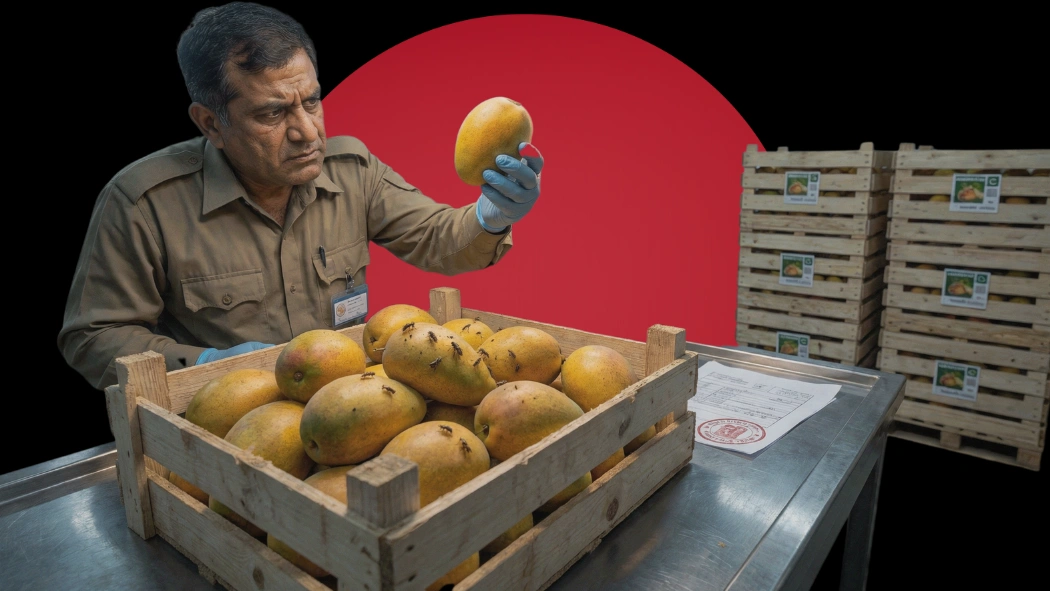
Iran’s Plant Protection Organisation has officially delisted Pakistani Hot Water Treatment (HWT) facility Heydar Shah HWT after detecting pest-contaminated mango consignments that violated phytosanitary protocols. In an official notification dated August 2, Iranian authorities informed Pakistan’s Department of Plant Protection (DPP) that the shipments failed to meet mandated disinfection standards, warning that unaddressed violations could risk broader trade restrictions. The Iranian action coincides with internal regulatory scrutiny in Pakistan, where surprise inspections uncovered systemic lapses—including missing temperature-monitoring equipment during live treatment cycles and administrative interference aimed at easing inspection rigor.
Iran’s Plant Protection Organisation has suspended export clearance for Pakistani Hot Water Treatment (HWT) facility Heydar Shah HWT after detecting pest contamination—specifically fruit fly larvae—in recent mango consignments. The Iranian regulatory body notified Pakistan’s Department of Plant Protection (DPP) on August 2, confirming that the facility has been removed from Tehran’s authorized list of certified export treatment plants.
Tehran warned that failure to enforce strict phytosanitary compliance could trigger broader restrictions on Pakistani agricultural imports under emergency plant quarantine guidelines.
Phytosanitary Standard Protocols & Operational Lapses
Under bilateral plant quarantine protocols signed between Pakistan and importing partners (including Iran, the EU, and Australia), exported mangoes must undergo hot water treatment—typically maintaining pulp temperatures at 48°C for at least 60 minutes—to eliminate fruit fly larvae (Bactrocera dorsalis).
The Iranian delisting coincides with an internal inquiry within the DPP. A surprise monitoring inspection conducted on July 4 at an HWT facility processing a 21-tonne consignment revealed that inspecting officers were unable to verify critical temperature parameters because plant staff failed to provide basic measuring tools. Furthermore, official documents indicated that inspecting officers left the facility mid-treatment and received administrative instructions directing them to inspect plants “without unnecessary strictness”.
Commercial Impact on the Mango Industry
The trade suspension comes during a challenging export season for Pakistani mango growers and commercial shippers, who are managing multiple operational headwinds:
- Regional Market Vulnerability: Iran represents a primary regional destination for land-route mango shipments via the Taftan–Mirjaveh border, providing high-volume absorption for Sindh and Punjab crops.
- Cascading Regulatory Risk: Industry analysts warn that official non-compliance notifications from Iranian inspectors increase the likelihood of secondary audits and potential import bans from other strict regulatory markets, including the European Union.
- Compounding Sectoral Pressures: Exporters are already managing reduced overall yields stemming from erratic weather patterns during the early bloom cycle, combined with elevated sea freight rates and regional transport disruptions.
Government Response & Stricter Verification
In response to the Iranian notification and internal inspection findings, the Ministry of National Food Security and Research has initiated a review of all accredited HWT facilities.
The ministry is evaluating stronger verification standards, including mandatory digital logging of water and pulp temperatures, real-time video monitoring during active treatment cycles, and independent third-party audits before phytosanitary certificates are authorized for customs clearance.

 Agriculture
 Agriculture
 Agriculture