SMEDA Consults Women Chambers To Strengthen Businesses And Expand Access To Finance.
Listen2 min
Read aloud by your device’s built-in synthetic voice, not a recording. Needs a browser that can read aloud.
✧ GENERATE BRIEFING
SMEDA holds stakeholder consultations with women chambers of commerce to improve financial access, digital portal tools, and business support for women entrepreneurs. The Small and Medium Enterprises Development Authority (SMEDA) has intensified consultations with women's chambers of commerce nationwide to identify systemic bottlenecks and improve access to finance, market linkages, and business support services for women-led enterprises. Chaired by SMEDA Board Member Aasia Saail, the sessions focused on creating robust institutional mechanisms tailored to female entrepreneurs.Key initiatives discussed during the consultations include the upcoming rollout of a dedicated Women Entrepreneurship Portal and the creation of a centralized national database to help policymakers design targeted interventions. These efforts complement SMEDA's broader strategic collaborations including partnerships with JICA, the Pakistan Institute of Fashion and Design (PIFD), and a recent MoU with the Prime Minister’s Youth Programme aimed at boosting financial literacy and credit access for micro, small, and medium enterprises (MSMEs).
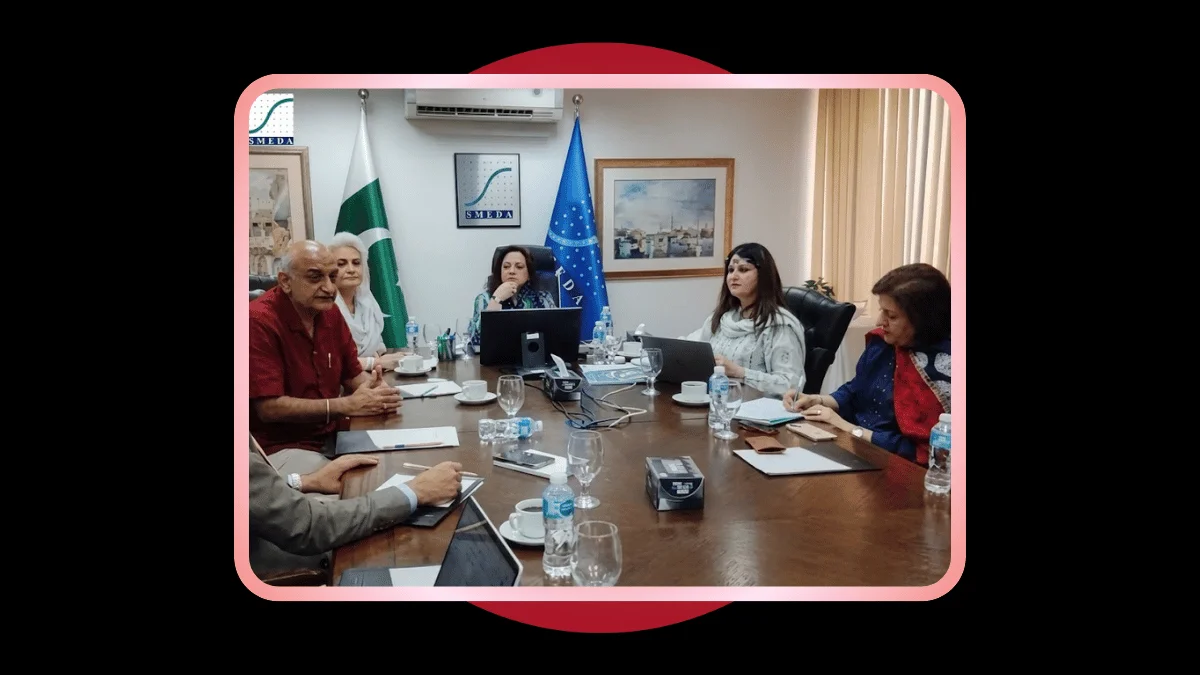
The Small and Medium Enterprises Development Authority (SMEDA) has stepped up consultations with women chambers across Pakistan to identify barriers facing women-owned businesses and improve their access to finance, skills, markets and business support services.
The initiative is focused on promoting women’s entrepreneurship and strengthening micro-enterprises as part of broader efforts to expand participation in economic activity. Representatives of women chambers shared practical challenges affecting their businesses during the consultations.
The session was chaired by SMEDA Board Member Aasia Saail, who called for stronger institutional mechanisms to address the specific requirements of women entrepreneurs and make SME support programmes more accessible and responsive.
Saail highlighted the proposed Women Entrepreneurship Portal, which is intended to provide women entrepreneurs with business information, support services and business opportunities through a dedicated platform.
SMEDA also plans to develop a comprehensive database of women entrepreneurs. The database is expected to help policymakers and institutions better identify business needs and design targeted programmes covering financing, incentives, training and market linkages.
Women chamber representatives identified access to finance, business information, markets, skills development and institutional support among the key challenges facing women-led enterprises. Their feedback is expected to guide SMEDA in designing more demand-driven interventions.
SMEDA is also working with national and international partners, including the Japan International Cooperation Agency (JICA) and the Pakistan Institute of Fashion and Design (PIFD), to provide technical assistance, capacity building and entrepreneurship development support.
The latest consultations follow SMEDA’s broader push to improve access to formal financing and business development services for underserved entrepreneurs. Earlier this month, SMEDA and the Prime Minister’s Youth Programme signed an MoU to expand awareness, financial literacy and business support for MSMEs, with women entrepreneurs among the groups specifically targeted.