
US Harvest Delays Push Soybean Prices Higher And Squeeze Processors.
Listen2 min
Read aloud by your device’s built-in synthetic voice, not a recording. Needs a browser that can read aloud.
✧ GENERATE BRIEFING
Persistent Midwest rains delay the US soybean harvest, creating a severe supply squeeze, soaring processor premiums, and higher futures prices. Persistent late-summer and autumn rains across the U.S. Midwest have severely disrupted the soybean harvest, stalling field machinery, tightening near-term supplies, and driving cash soybean prices significantly higher. With old-crop supplies running thin and new-crop fields too muddy for operators, processing plants are facing a severe supply squeeze. Major agribusinesses have resorted to offering heavy cash premiums such as $1.00 per bushel over Chicago Board of Trade (CBOT) futures at Cargill’s Sioux City plant and an 85-cent premium at Bunge’s Council Bluffs facility. The supply shortfall has forced several processing plants to scale back operations, rippling across downstream markets to push October soymeal futures to life-of-contract highs and creating an unusual inverse structure in the futures market.
Persistent rains across the US Midwest are delaying the soybean harvest, tightening near-term supplies and forcing processors to offer large premiums for immediate deliveries, Reuters reported.
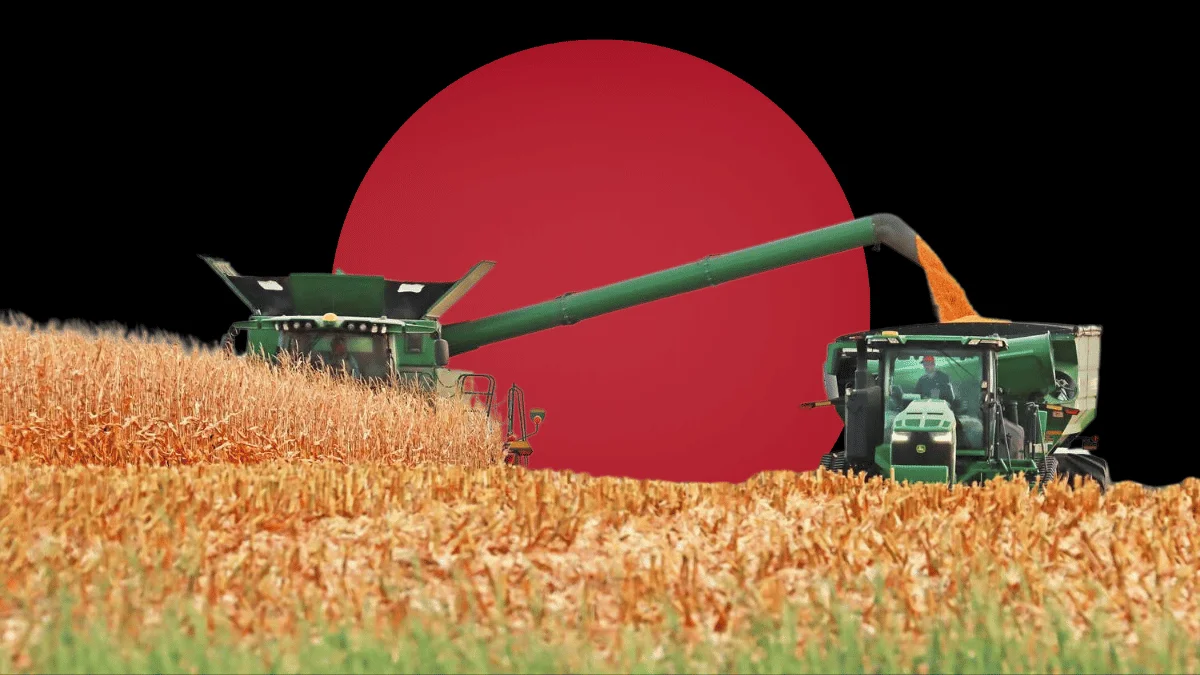
The supply squeeze has already pushed up cash soybean prices, creating an unexpected opportunity for farmers who still have old-crop supplies available. However, many growers are unable to benefit from the higher prices because wet and muddy fields are preventing harvesting machinery from operating.
US soybean processors have expanded crushing capacity in recent years, largely because of stronger demand for biofuels. The US Department of Agriculture expects processors to crush a record 2.78 billion bushels of soybeans during the current crop year, increasing competition for available supplies.
The shortage has prompted processors to pay significant premiums. Bunge’s Council Bluffs, Iowa, plant was offering an 85-cent-per-bushel premium for soybeans delivered through Saturday, while Cargill was bidding about $1 per bushel above November Chicago Board of Trade futures for immediate deliveries at its Sioux City plant.
Some processing plants have already reduced their crushing activity because they cannot secure enough soybeans. The slowdown is tightening supplies of soymeal, an important livestock-feed ingredient, as well as soyoil, which is used in food production and biofuels.
The shortage has also spilled into the futures market. October soymeal futures reached a contract high and moved into an unusual premium over December contracts, signalling tightness in nearby supplies.
Harvest delays are not limited to western Iowa. Processors in central and eastern parts of the Midwest are also offering higher prices to attract available beans. Heavy August and September rainfall has left fields saturated, slowed crop dry-down and pushed harvesting schedules back by several weeks.
The immediate supply squeeze comes as the US soybean sector also faces uncertainty over exports to China, the world’s largest soybean importer. China has diversified its purchases toward Brazil and other suppliers amid trade tensions, although state-owned Chinese buyers have returned to the US market this summer.

 Agriculture
 Agriculture
 Agriculture