
Pakistan Pushes AI-Powered Border Digitalisation And Customs Harmonisation At CAREC Meeting
Listen3 min
Read aloud by your device’s built-in synthetic voice, not a recording. Needs a browser that can read aloud.
✧ GENERATE BRIEFING
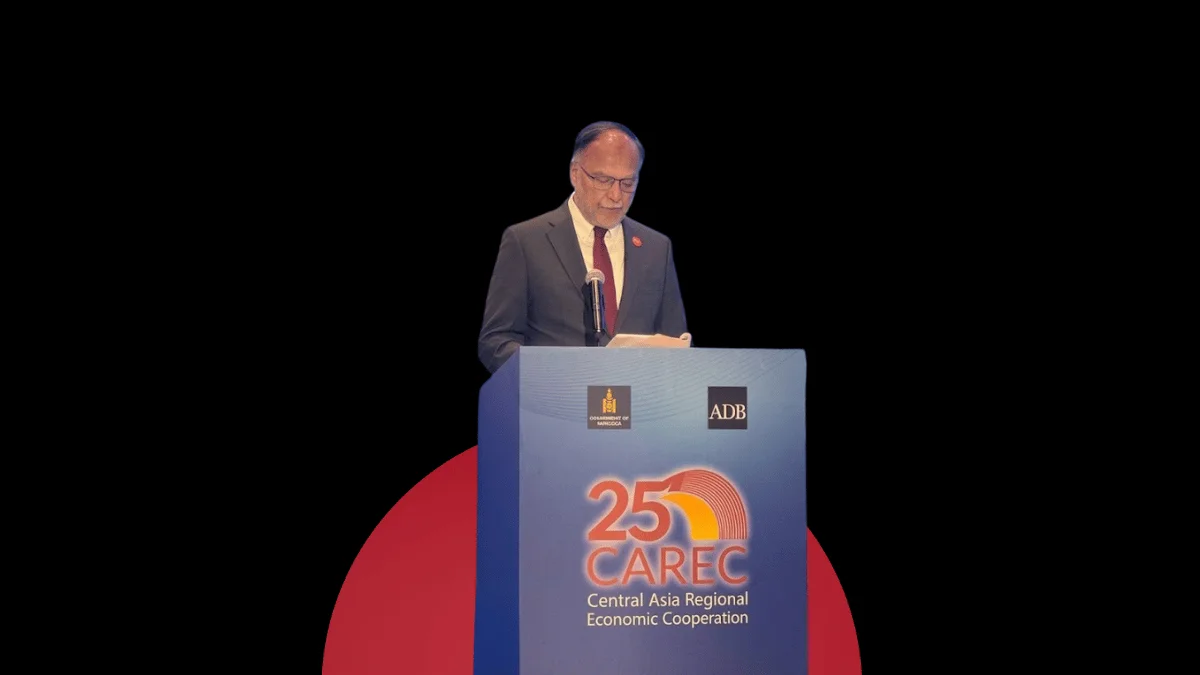
Planning Minister Ahsan Iqbal proposed AI-driven customs digitalisation and integrated borders at the 25th CAREC Ministerial Conference. Federal Minister for Planning, Development and Special Initiatives Ahsan Iqbal has pitched a comprehensive proposal for AI-powered border digitalisation and customs harmonisation across the Central Asia Regional Economic Cooperation (CAREC) region. Speaking at the 25th CAREC Ministerial Conference in Ulaanbaatar, Mongolia, the minister stressed that member states must move past basic infrastructure talks and focus on creating smart, frictionless economic corridors.Highlighting Pakistan's Pakistan Single Window (PSW) as a foundational model, Islamabad urged CAREC nations to adopt advance electronic documentation, synchronize operating hours at critical crossings like Torkham and Chaman, and utilize artificial intelligence to pre-clear the cargo before arrival. The initiative forms part of Pakistan's broader geo-economic strategy ahead of assuming the CAREC Chairmanship in 2027.
Pakistan has proposed harmonising customs regulations and using artificial intelligence to digitalise border processes across the Central Asia Regional Economic Cooperation (CAREC) region, aiming to make regional trade corridors faster and more efficient.
Federal Minister for Planning, Development and Special Initiatives Ahsan Iqbal, speaking at the 25th CAREC Ministerial Conference in Ulaanbaatar, said the region needed to move beyond discussions on connectivity and focus on delivering practical trade corridors.
Moving Toward Smart, AI-Driven Borders
Iqbal called for greater coordination of customs procedures, digital documentation and border operations to reduce delays in the movement of cargo. He also highlighted Pakistan’s proposal for a CAREC Digital Corridor, under which artificial intelligence could be deployed to make trade and connectivity faster, smarter and more productive.
The minister noted that Pakistan’s established Pakistan Single Window (PSW) platform provides a robust foundation for phased digital integration with regional partners. Cargo documentation, he emphasized, should increasingly be processed electronically before consignments reach physical border crossings.
Shared Border Services and Infrastructure
Pakistan also wants CAREC countries to treat borders as a shared service by:
- Aligning operating hours and introducing advance electronic information.
- Coordinating inspection procedures and eliminating redundant checks.
- Measuring operational progress through quantitative indicators like border waiting times, delivery schedules, SME participation, and local job creation.
Iqbal stated that Pakistan’s strategic geographic position—linking Central Asia, South Asia, China, and the Arabian Sea—offers a unique opportunity to leverage geo-economics. CAREC Corridors 5 and 6 are viewed by Islamabad as vital conduits connecting landlocked Central Asian economies to global maritime routes.
The proposed digital corridor complements wider efforts to upgrade regional transport infrastructure, including modernizing border facilities at Torkham and Chaman, strengthening rail freight capacity through the proposed ML-1 upgrade, and building stronger links between inland dry ports and seaports. Pakistan is preparing to assume the CAREC chairmanship in 2027 and host the 26th Ministerial Conference, with a core focus on practical cooperation, digital integration, and trade facilitation.

 Tech & Startups
 Tech & Startups
 Tech & Startups