Pakistan Shifts Focus To Private Sector-Led Growth After Economic Stabilization: Aurangzeb.
Listen3 min
Read aloud by your device’s built-in synthetic voice, not a recording. Needs a browser that can read aloud.
✧ GENERATE BRIEFING
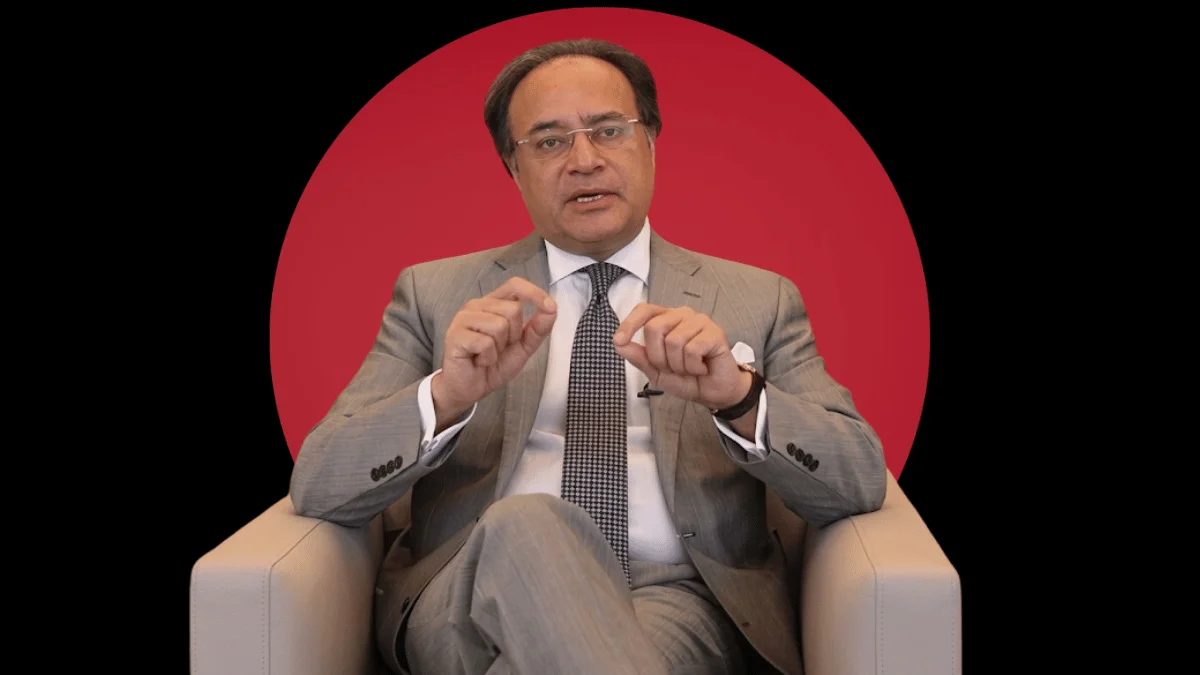
Finance Minister Muhammad Aurangzeb outlined six economic priorities at OICCI, highlighting tax reforms, private sector-led growth, and capital expansion. Finance Minister Muhammad Aurangzeb announced that Pakistan’s economic focus is pivoting from post-crisis stabilization toward long-term, private sector-led growth. Addressing stakeholders at the Overseas Investors Chamber of Commerce and Industry (OICCI) in Karachi, Aurangzeb affirmed that sustainable expansion must be anchored by private capital, exports, productivity, and employment generation, with the government transitioning into a facilitator of policy continuity and regulatory ease. The minister outlined six structural economic priorities, spanning fiscal resilience, tax base expansion, capital market deepening, and adoption of "New Economy" technologies like blockchain and Web 3.0. Highlighting implementation progress, he noted that active tax filers have surged to 5.7 million, while over Rs60 billion has been deployed under the Prime Minister’s Apna Ghar housing initiative to stimulate construction and job creation.
Finance Minister Muhammad Aurangzeb said Pakistan’s economy was moving in the right direction as the government focuses on consolidating macroeconomic stability and shifting toward sustainable, private sector-led growth.
Addressing members and stakeholders of the Overseas Investors Chamber of Commerce and Industry (OICCI) in Karachi, the minister said sustainable economic growth would increasingly have to be driven by the private sector, while the government would focus on providing a conducive business environment, policy framework, and investment ecosystem.
Six Strategic Economic Priorities
Aurangzeb outlined six core priorities guiding the administration’s economic blueprint:
- Fiscal & External Resilience: Solidifying macroeconomic stabilization and building foreign buffer capacity.
- Productivity & Export Growth: Transitioning from stabilization toward inclusive, investment-driven growth focused on job creation and exports.
- Structural Reform Execution: Moving tax administration, energy sector reforms, state-owned enterprise (SOE) restructuring, and privatization into the direct execution phase.
- Trade Over Aid: Shifting international economic relations from external aid reliance toward direct trade and foreign direct investment (FDI).
- Financial Inclusion: Expanding credit channels for SMEs, agriculture, housing, and historically underserved economic segments.
- Digitalization & Emerging Technologies: Positioning the domestic market for opportunities in Web 3.0, blockchain, and digital infrastructure.
Tax Filers Reach 5.7 Million and Credit Expansion
The minister emphasized that structural tax reforms are yielding measurable results. The total number of active tax filers has crossed 5.7 million, representing significant expansion compared to ~3.9 million in the previous year and 1.8–1.9 million recorded in 2022. He added that revenue mobilization will continue alongside enhanced taxpayer facilitation using data-driven compliance tools.
On domestic financial mobilization, Aurangzeb noted that approximately Rs60 billion has been disbursed under the Prime Minister’s Apna Ghar Programme to translate credit access into tangible construction activity, employment, and real estate growth.
Sectoral Interest and Capital Market Deepening
Highlighting foreign investor appetite, the finance minister pointed to growing international inquiries in mining and minerals, technology, agriculture, oil and gas, and refinery upgrades.
To support long-term funding requirements, he stressed the necessity of deepening Pakistan’s capital markets to channel domestic savings toward national infrastructure, privatization pipelines, and corporate expansion. Reiterating the government’s operational stance, Aurangzeb stated that state institutions will ensure policy continuity and regulatory ease while private capital drives innovation, job creation, and sustainable economic momentum.