Govt Clarifies Pakistan’s 48% Share Of MENAAP Extreme Poor
Listen3 min
Read aloud by your device’s built-in synthetic voice, not a recording. Needs a browser that can read aloud.
✧ GENERATE BRIEFING
The Government of Pakistan has responded to the World Bank’s recent economic update, which indicated that Pakistan accounts for 48% of the extreme poor in the newly designated Middle East, North Africa, Afghanistan, and Pakistan (MENAAP) region. Adviser to the Finance Minister Khurram Schehzad clarified that the high proportion is largely a statistical artifact of the World Bank's administrative reclassification—shifting Pakistan and Afghanistan into a new regional reporting group—rather than a sudden geographical or economic shift. Because Pakistan carries a substantially larger population than many traditional Middle Eastern and North African economies, its integration naturally skews absolute regional aggregates. At the same time, the government's clarification acknowledges the underlying structural hurdles highlighted in the report. The World Bank assessment noted that Pakistan's poverty rate increased by 6.4 percentage points between 2018–19 and 2024–25, driven by cumulative shocks including the COVID-19 pandemic, the 2022 floods, high domestic inflation, currency depreciation, and prolonged economic stabilization adjustments.
The government has said the World Bank’s latest assessment showing that Pakistan accounts for nearly half of the extreme poor in the newly defined Middle East, North Africa, Afghanistan and Pakistan (MENAAP) region partly reflects a change in the World Bank’s regional classification, rather than a change in Pakistan’s geographical or economic status.
Adviser to the Finance Minister Khurram Schehzad said Pakistan’s inclusion in the MENAAP reporting group was an administrative and statistical reclassification that changed the composition of regional aggregates. He stressed that the move does not alter Pakistan’s geographical identity as a South Asian country or its income classification.
The World Bank’s latest MENAAP economic update said Pakistan accounted for 48% of people living below the $3-a-day extreme poverty line in the region in 2024. It also estimated that Pakistan’s poverty rate increased by 6.4 percentage points between 2018-19 and 2024-25.
Schehzad cautioned against interpreting the 48% figure as meaning that poverty had suddenly shifted from other countries to Pakistan. He said Pakistan’s large population compared with several economies in the traditional Middle East and North Africa grouping naturally changes the composition of regional poverty statistics after the reclassification.
The World Bank previously explained that Pakistan and Afghanistan were moved from its South Asia grouping into the new MENAAP region. The change affects regional aggregates such as population, GDP, labour-market indicators and poverty statistics, meaning comparisons with earlier regional data need to account for the revised composition.
Underlying Economic Pressures and Shocks
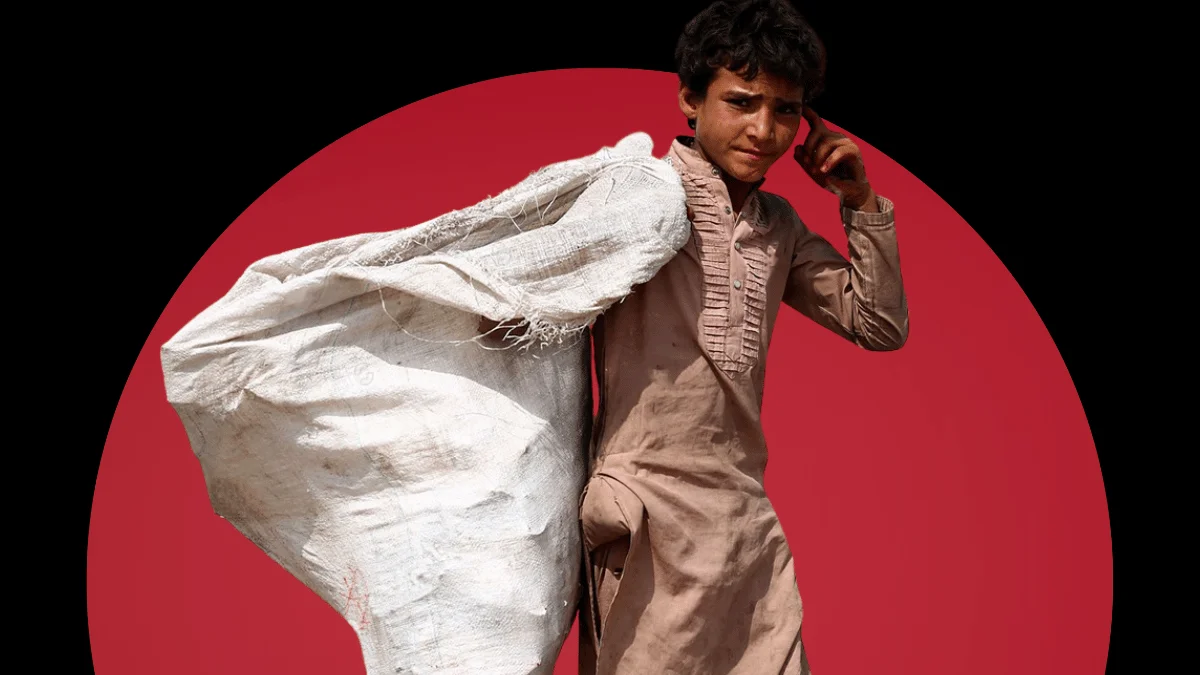
However, the government’s clarification does not dispute the underlying deterioration in Pakistan’s poverty indicators. The World Bank said MENAAP is now the only region where poverty remains above pre-pandemic levels and continues to rise, with Pakistan driving much of the deterioration.
The World Bank attributed the rise in Pakistan’s poverty to a series of economic shocks, including the COVID-19 pandemic, devastating 2022 floods, high inflation, currency depreciation and prolonged economic adjustment that weakened real household incomes and employment opportunities.
The World Bank estimated that 14.3% of MENAAP’s population lived on less than $3 a day in 2024, compared with 10.4% globally. The latest debate therefore involves both the impact of Pakistan’s reclassification on regional statistics and the country’s own worsening poverty indicators.