European Stocks Gain As ASML Signals Strong Chip-Tool Demand
Listen3 min
Read aloud by your device’s built-in synthetic voice, not a recording. Needs a browser that can read aloud.
✧ GENERATE BRIEFING
European equities rebounded on Wednesday, October 14, 2026, led by a sharp recovery in tech stocks following strong third-quarter financial results and bullish multi-year guidance from Dutch semiconductor manufacturing equipment giant ASML Holding NV. The pan-European STOXX 600 index rose 0.48% to reach 638.07 points, as ASML’s update alleviated market fears that capital expenditure on artificial intelligence (AI) infrastructure was tapering off.Key market and corporate highlights include:ASML Guidance Expansion: Shares in ASML advanced 2.4% after the company reported Q3 net sales of €11.7 billion and net income of €5.0 billion. Management narrowed its full-year 2026 net sales forecast to €44 billion–€45 billion (raising the lower bound from €43 billion) and projected Q4 sales of €14.2 billion to €15.2 billion. Supply-Deficit Warning through 2028: ASML explicitly warned that unprecedented AI demand means its planned production capacity for Extreme Ultraviolet (EUV) and Deep Ultraviolet (DUV) lithography systems will be unable to fully satisfy customer orders in 2027 and 2028.
European stocks edged higher on Wednesday as strong results and an upbeat demand outlook from Dutch semiconductor equipment maker ASML lifted technology shares, helping markets recover from losses in the previous session.
The pan-European STOXX 600 index rose 0.48% to 638.07 points by 0857 GMT, while the technology sector gained 1.2%. The recovery followed a global chip-stock sell-off on Tuesday, triggered by reports of advances by a Chinese chipmaker.
ASML Supply Deficit and Revised 2026 Outlook
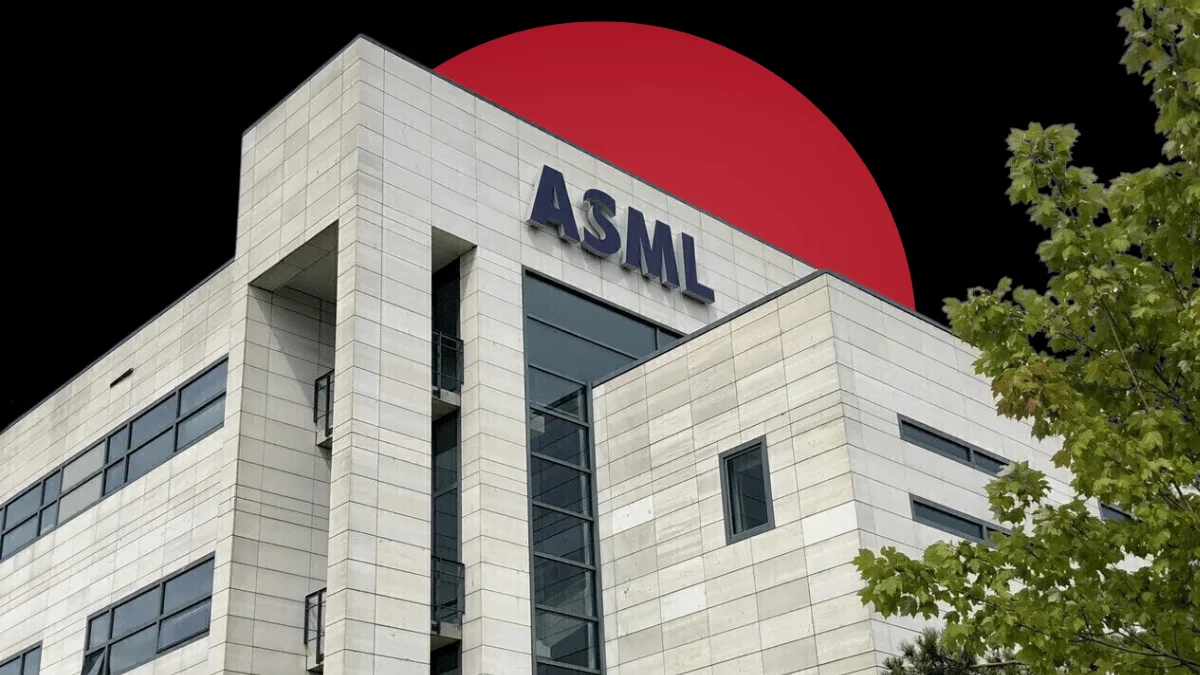
ASML, the world’s largest supplier of semiconductor manufacturing equipment, climbed 2.4% after saying demand for its chipmaking tools, driven by artificial intelligence investment, was so strong that it might not be able to meet all customer requirements in 2027 and 2028. The company also raised the lower end of its full-year sales outlook to between €44 billion and €45 billion and said it was exploring ways to expand production capacity beyond planned targets.
The company’s outlook reassured investors concerned that the AI investment boom could be losing momentum. Strong demand for advanced chips and expanding data-centre infrastructure continue to support spending by semiconductor manufacturers, benefiting equipment suppliers such as ASML.
Regional Underperformance and Sector Divergence
Despite Wednesday’s gains, European equities have lagged major technology-heavy markets this year. The STOXX 600 was up around 7.8% in 2026, compared with a 17% gain for the Nasdaq and an approximately 42% rise in South Korea’s KOSPI.
Other sectors recorded mixed performances. Luxury stocks gained 0.9%, although the sector remained under pressure following concerns about its recovery after recent results from LVMH. Insurers slipped 0.2%, while Danish renewable-energy company Ørsted, British IT firm Softcat and Sweden’s SEB also declined amid company-specific concerns.
Inflation Risks and Macroeconomic Outlook
Investors remained cautious as oil prices stayed above $100 per barrel amid tensions in the Middle East and disruptions affecting shipping through the Strait of Hormuz. Higher energy costs have fuelled inflation concerns, strengthening expectations that the European Central Bank could tighten monetary policy later this year.
Market participants were also awaiting US consumer price index data for further clues about the Federal Reserve’s interest-rate outlook. The inflation figures, alongside developments in energy markets and demand for AI-related technology, were expected to influence the direction of global equities.