Remove Barriers to Investment to Drive Economic Growth, Federal Minister Qaiser Ahmed Sheikh
Listen5 min
Read aloud by your device’s built-in synthetic voice, not a recording. Needs a browser that can read aloud.
✧ GENERATE BRIEFING
Federal Minister for the Board of Investment Qaiser Ahmed Sheikh addressed industrialists at the Korangi Association of Trade and Industry, emphasizing that the Korangi Industrial Area generates 9 percent of Pakistan's total exports. During the session, the minister highlighted structural economic disparities, noting that while early regional competitors evolved into global economic superpowers, Pakistan's exports have stagnated around $30 billion due to internal divisions and limited industrial expansion. KATI President Muhammad Ikram Rajput praised the minister's extensive commercial experience and urged the federal government to implement a streamlined one-window operation for land acquisition, regulatory approvals, and business licensing. Rajput further called for urgent government action to lower persistent energy costs, accelerate tax refunds, and establish predictable, long-term economic policies to encourage both domestic and foreign private investment across the country's key manufacturing sectors.
KATI President Muhammad Ikram Rajput calls for key economic role for Qaiser Ahmed Sheikh, urges consistent long-term policies to ensure economic stability
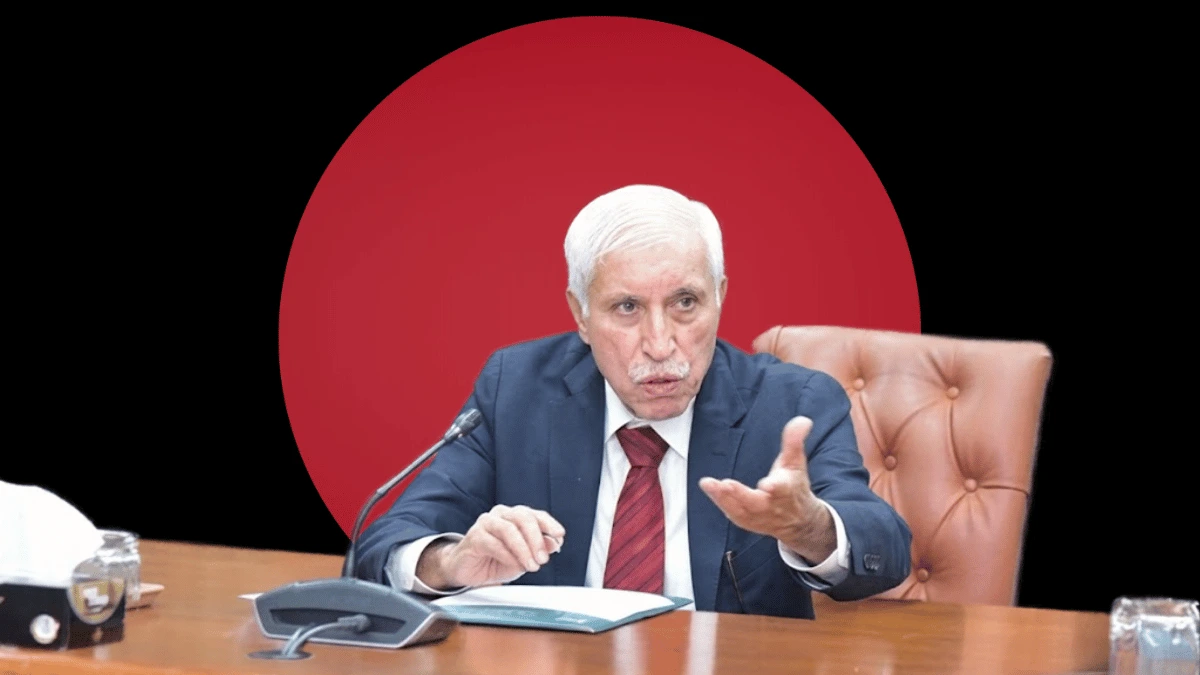
KARACHI: Federal Minister for the Board of Investment (BOI) Qaiser Ahmed Sheikh has said that the Korangi Industrial Area accounts for 9 percent of Pakistan’s total exports, underscoring the strategic importance of the industrial zone to the country’s economy.
Addressing industrialists at the Korangi Association of Trade and Industry (KATI), the federal minister said Pakistan’s business community had historically demonstrated significant entrepreneurial potential, noting that China had learned from Pakistan’s business community in the early stages of its economic development. However, he said China had since emerged as the world’s second-largest economy while Pakistan continued to struggle with economic challenges.
The minister said China had become a major global economic power, with people across the country engaged in businesses and contributing to economic growth. In contrast, he said, only a limited number of people in Pakistan had managed to establish themselves as successful industrialists and businessmen. He attributed part of the challenge to internal divisions and difficulties in developing a strong business-oriented culture, adding that political divisions had also hindered economic progress.
He said Pakistan’s economy was largely dependent on small and medium-sized enterprises (SMEs), which required greater policy attention and support. Qaiser Ahmed Sheikh said the world had recognised Chief of Army Staff Field Marshal Asim Munir as an effective diplomat and Pakistan should benefit from this diplomatic strength.
He said that, despite serving as a federal minister, he had never received a salary or government perks, while he had paid taxes amounting to millions of rupees from his own business.
The federal minister said he had repeatedly sought a meeting with Prime Minister Shehbaz Sharif to brief him on the problems being faced by the business community, but had yet to receive an appointment. He said he wanted to discuss the obstacles hindering industrial growth and investment directly with the prime minister.
Qaiser Ahmed Sheikh questioned why Pakistan’s exports had remained around $30 billion for several years while other countries in the region were exporting several times more. He stressed the need for greater focus on expanding the country’s export base.
Earlier, KATI President Muhammad Ikram Rajput urged the government to assign Federal Minister Qaiser Ahmed Sheikh an important portfolio relating to economic affairs, saying that he was a successful businessman with more than five decades of experience and had an in-depth understanding of the challenges confronting the economy, investment and industry.
Rajput said Qaiser Ahmed Sheikh had practical experience in business, parliamentary politics and government affairs. He had served as a member of the National Assembly during several terms, held the portfolio of federal minister for maritime affairs and was now serving as the federal minister responsible for the Board of Investment.
The KATI president said the government should simplify the process of acquiring land, verifying ownership, obtaining no-objection certificates (NOCs) and securing approvals from various departments for new industries and investors through a one-window mechanism.
He called for the priority resolution of issues relating to high energy costs, taxation and tax refunds to reduce industrial production costs and create a more conducive environment for new investment in Pakistan. He noted that the Karachi business community had also repeatedly highlighted issues relating to energy tariffs and sales tax refunds.
Rajput stressed the need for consistent and long-term investment policies so that domestic and foreign investors could undertake long-term planning with confidence. He said the availability of electricity, gas, water, roads and other basic infrastructure in industrial zones and real estate projects should be made an integral part of the country’s investment policy.
The KATI president said investment should not remain confined to files and announcements. Instead, under a one-window system, the government and industrialists should work as partners from the approval stage through to the implementation of investment projects.
UBG Chairman Khalid Tawab, President Zubair Tufail, former MNA Kanwar Qutbuddin and KATI Senior Vice President Zahid Hameed also addressed the gathering.