Pakistan Reaffirms $100 Billion Export Target By 2035 At PIDE Conference
Listen3 min
Read aloud by your device’s built-in synthetic voice, not a recording. Needs a browser that can read aloud.
✧ GENERATE BRIEFING
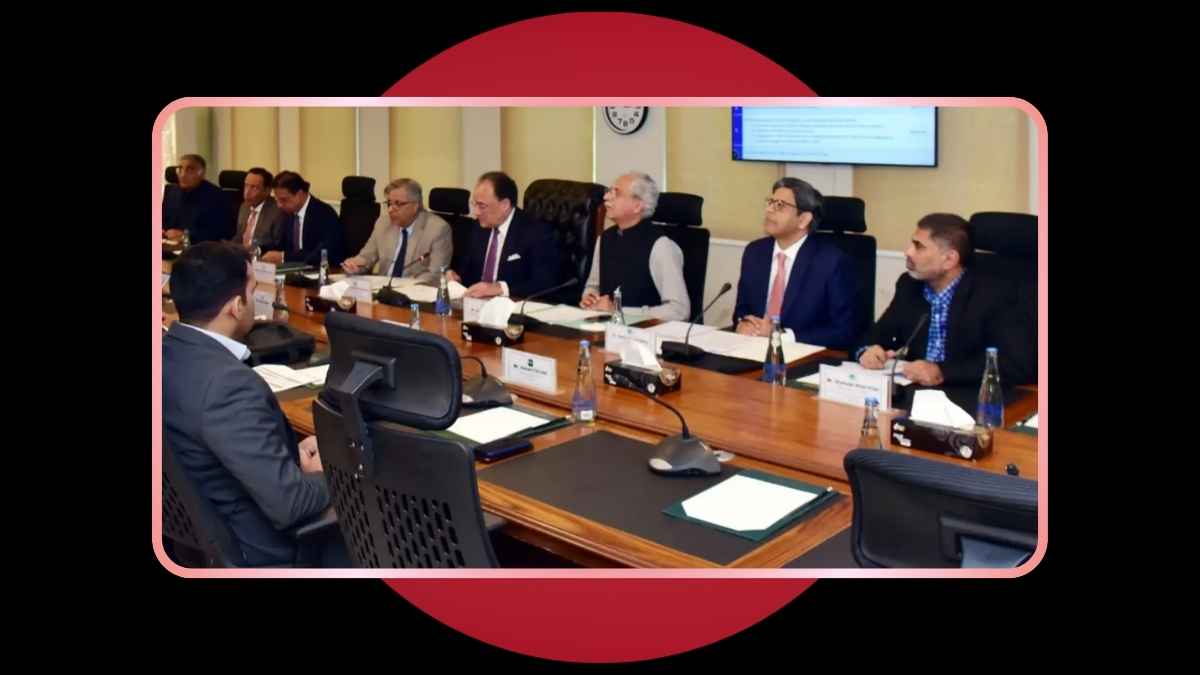
At the closing ceremony of the 39th Annual General Meeting and International Conference of the Pakistan Society of Development Economists (PSDE), hosted by the Pakistan Institute of Development Economics (PIDE) in Islamabad on October 16, 2026, Prime Minister’s Coordinator on Commerce and Industries Rana Ihsaan Afzal Khan reaffirmed Pakistan's target of achieving $100 billion in annual exports by 2035. The strategy sets an intermediate export target of $60 billion, anchored by deep structural reforms, tariff rationalization, and private-sector diversification. Key policy pillars, structural trade mechanisms, and financial commitments include: National Tariff Policy 2025–30 & Regulatory Streamlining: The government is rationalizing duties across ~7,500 tariff lines, phasing out regulatory/additional customs duties, and capping maximum customs duties at 15% to lower industrial input costs. Additionally, ~500 regulatory requirements are under review, alongside the operationalization of a newly approved Trade Facilitation Board.
Pakistan has reaffirmed its target of increasing annual exports to $100 billion by 2035, with the government planning tariff reforms, improved market access, greater financing for small businesses and diversification into high-potential sectors.
Prime Minister’s Coordinator on Commerce and Industries Rana Ihsaan Afzal Khan announced the target while addressing the closing ceremony of the 39th Annual General Meeting and International Conference of the Pakistan Society of Development Economists (PSDE), held at the Pakistan Institute of Development Economics (PIDE) in Islamabad on October 16.
Intermediate Milestones and National Tariff Policy
He said Pakistan was moving towards an export-oriented economy to address recurring economic challenges and achieve sustainable growth. The government has set an intermediate export target of $60 billion, followed by the longer-term goal of $100 billion annually by 2035.
Under the National Tariff Policy 2025–30, the government plans to rationalise duties across approximately 7,500 tariff lines, gradually eliminate regulatory and additional customs duties, and reduce the maximum customs duty to 15% to improve industrial competitiveness.
Regulatory Reforms and SME Credit Expansion
The government is also reviewing around 500 regulatory requirements and removing unnecessary certification and inspection procedures to reduce compliance costs for businesses. A recently approved Trade Facilitation Board is expected to improve coordination among government agencies, streamline export logistics and reduce port-related expenses.
On financing, the government aims to increase small and medium enterprise (SME) financing from Rs1 trillion to Rs2 trillion. Exporters are also being supported through concessional financing arrangements involving EXIM Bank and commercial banks. In addition, the tax collection rate on export proceeds was reduced from 2% to 1.25% in the federal budget for fiscal year 2026–27.
Market Access, Diversification, and Single Window Ecosystem
Rana Ihsaan Afzal highlighted efforts to expand international market access through engagement with Vietnam, South Korea, Cambodia, Bangladesh and African countries. He also pointed to 16 sanitary and phytosanitary protocols with China that have opened additional opportunities for Pakistani agricultural exports.
The government is seeking to diversify exports beyond traditional products by promoting information and communication technology services, agriculture, minerals, tourism, the blue economy, artificial intelligence and creative industries. The Trade Development Authority of Pakistan is also strengthening international business links through exhibitions and business-to-business engagements, including the upcoming FoodAg 2026 exhibition in Karachi.
Pakistan Single Window currently connects more than 108,000 traders with 32 government agencies, while 19 sectoral councils provide a channel for private-sector participation in trade policymaking. Conference participants also stressed the need for consistent policies, export-oriented investment, industrial upgrading and higher productivity to achieve sustainable export growth.