Experts urge Pakistan build local solar manufacturing industry.
Listen4 min
Read aloud by your device’s built-in synthetic voice, not a recording. Needs a browser that can read aloud.
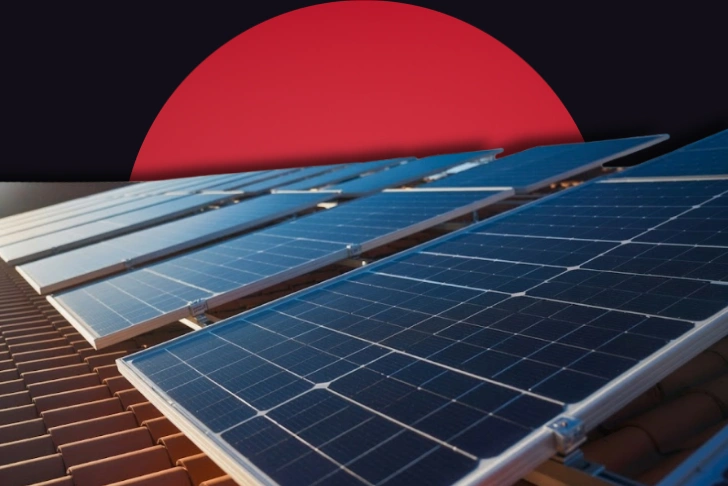
Energy industry leaders and international policy experts have urged Pakistan to transition from being a passive consumer of imported solar technology to developing a robust domestic solar manufacturing ecosystem.
Speaking at the conclusion of the Solar, Storage and Flexibility Conference in Islamabad, participants emphasized that establishing local manufacturing capability is vital to ensuring the country retains the full economic value, technological know-how, and job creation potential of its rapidly expanding rooftop solar market.
Overcoming Import Reliance
Despite emerging as one of the world’s fastest-growing consumer-driven solar markets, Pakistan remains heavily reliant on imported solar photovoltaic (PV) panels, battery systems, power inverters, and electric vehicles. As a result, a significant portion of capital spent on the renewable energy transition continues to flow overseas.
Industry leaders stressed that the next phase of Pakistan’s clean energy evolution must prioritize:
- Local Manufacturing Infrastructure: Building domestic production lines for panels, inverters, and Battery Energy Storage Systems (BESS).
- Technology Transfer & Innovation: Creating avenues for international technology partners to share manufacturing processes with local firms.
- Workforce Development: Investing in specialized engineering skills and technical training for installation, maintenance, and manufacturing operations.
- Policy Stability: Establishing clear, long-term regulatory frameworks to derisk private investments in clean-tech manufacturing.
Andrew Chang, Chief Executive Officer of New Energy Nexus, noted during the event that building an industrial clean-tech ecosystem requires a multi-layered approach beyond simply opening assembly plants. He stated that governments must actively de-risk new technologies, accelerate consumer adoption, support local entrepreneurs, and upskill technical workers to build lasting economic value.
Pakistan as a Blueprint for Global Solar Expansion
The conference also spotlighted Pakistan’s role in global renewable trends, explicitly referencing the Global Solar Council’s 300 Million Solar Homes campaign. Launched in partnership with the Global Covenant of Mayors for Climate & Energy (GCoM), the initiative aims to equip 300 million households and small enterprises globally with rooftop solar and storage solutions by 2030.
Organizers held up Pakistan as an early implementation case study. Key market highlights discussed include:
- Rapid Import Volume: Over the past two years, Pakistan imported more solar PV capacity than many developing nations installed across an entire decade.
- Residential Demand Surge: Residential electricity demand expanded by 32 percent, driven significantly by households adopting off-grid and distributed net-metered solar power to manage grid costs.
Global Solar Council CEO Sonia Dunlop described Pakistan’s bottom-up, consumer-led solar adoption as a model for emerging economies across the Global South. She highlighted that consumer demand demonstrates how distributed rooftop solar can offer immediate financial relief to families facing rising utility costs.
Bridging the $14 Billion Financing Gap
Despite the market’s trajectory, panelists highlighted major financial bottlenecks obstructing scale. While Pakistan’s distributed solar market is valued at approximately $14 billion, less than 4 percent of total installations have been financed through formal banking channels.
Experts concluded that the primary issue is not a global scarcity of capital, but rather rigid, traditional banking models that have failed to keep pace with decentralized consumer technology.
To bridge this gap and accelerate the next phase of deployment, conference delegates called on financial institutions, central banks, and development partners to introduce tailored financial mechanisms, including:
- Blended Finance Frameworks
- Credit Guarantees & Risk-Sharing Mechanisms
- Vendor Financing & Point-of-Sale Micro-Loans
- Asset Securitization & Green Bonds
Delegates concluded that while Pakistani consumers have proven their willingness to adopt clean energy when it makes economic sense, the responsibility now rests on policymakers, local industrial groups, and commercial banks to build an end-to-end local supply chain capable of supporting long-term economic growth.