$41.6bn remittances deepen Pakistan’s north-south economic divide
Listen5 min
Read aloud by your device’s built-in synthetic voice, not a recording. Needs a browser that can read aloud.
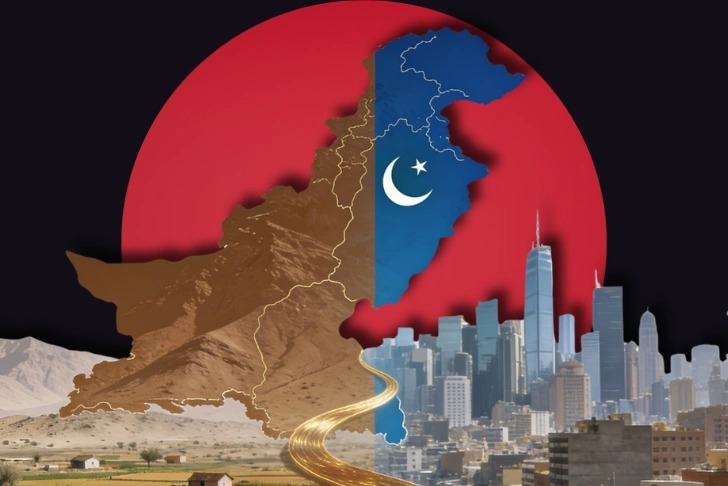
KARACHI: Pakistan received a record $41.6 billion in workers’ remittances during FY2025-26, an 8.6% increase from the previous year. The milestone masked a sharp regional imbalance.
The overwhelming share of these inflows concentrates in Punjab, Khyber-Pakhtunkhwa and Azad Jammu and Kashmir. Sindh and Balochistan receive only a fraction of the total.
Heavy concentration in the north
Applied economist Dr Jazib Mumtaz of the Institute of Business Administration estimates that roughly half of Pakistan’s overseas migrants originate from Punjab. About one-quarter come from K-P, around 9% from Sindh and the remainder from other regions.
If remittance flows follow the same pattern, Punjab alone absorbs nearly half of all inflows. Sindh receives far less despite hosting the country’s largest city and commercial hub.
The State Bank of Pakistan does not publish a detailed provincial breakdown of remittances. Economists therefore rely on migrant origin data as the best available proxy.
Why networks favour the north
Cultural and structural factors drive the imbalance. Punjab and K-P have built long-standing overseas migration networks over several generations.
Families already settled abroad help relatives secure jobs, accommodation and documentation. These networks lower the cost and risk of migration for new workers.
In many northern districts, migration has become an intergenerational strategy. One successful migrant often enables several relatives to follow the same path.
Outside major industrial centres, young people in these areas typically face three options: government employment, overseas work or running a small shop that depends on remittance spending.
Weaker systems in the south
Sindh and Balochistan lack comparable ecosystems. Many communities in interior Sindh have historically relied more on agriculture and local employment. Overseas networks remain thinner.
The International Organisation for Migration notes that access to information, recruitment channels, skills training and financial resources is stronger in Punjab and the settled areas of K-P than in much of interior Sindh.
Karachi forms a partial exception within Sindh. Its size, economic importance and international connections generate significant outward migration. Yet even in Karachi, formal pathways remain limited for many lower-income youth.
Workers from Sindh and especially Balochistan face fewer licensed overseas employment promoters, limited access to internationally recognised training and higher overall migration costs.
Consequences beyond household income
The absence of a strong remittance culture carries wider costs. Agriculture in parts of Sindh continues to suffer from water shortages and declining productivity. Industrialisation has not generated broad-based employment.
Overseas employment could have offered a third income stream for thousands of households. Successive provincial governments have done little to integrate labour migration into economic planning.
The International Labour Organisation describes the disparity as largely structural rather than demographic. Punjab and K-P developed denser networks of technical institutes, assessment centres and certification providers. These institutions make overseas employment easier and safer.
Local markets and inequality effects
Remittances raise living standards for recipient households. They can also widen inequality within communities. Higher purchasing power pushes up land prices, rents and the cost of many services.
Families without migrant income must compete in the same markets on purely domestic earnings. Economists describe this as a localised form of Dutch Disease in high-remittance districts.
In the south, the relative lack of these inflows means fewer such pressures but also fewer resources for housing, education and small enterprise.
Policy gaps and the way forward
Labour migration creates supporting industries in recruitment, vocational training, language centres and documentation services. Expanding these systems in the south would require deliberate provincial effort.
The ILO recommends that provincial governments integrate international labour mobility into their skills strategies. This includes demand-driven technical training, better recognition of prior learning and alignment with shortages in destination countries.
The National Emigration and Welfare Policy 2026 seeks to improve safe emigration, skills development and formal channels. Its impact will depend heavily on whether southern provinces receive focused attention and resources.
Record national inflows ease pressure on the external account. They cannot close the north-south opportunity gap on their own. Without stronger migration networks and skills systems in Sindh and Balochistan, the $41.6 billion milestone will continue to reflect both national resilience and persistent regional divides.