
Pakistan Estimates Mineral Trove at $7 Trillion, Seeks Foreign Capital via Uraan Framework.
✧ GENERATE BRIEFING +
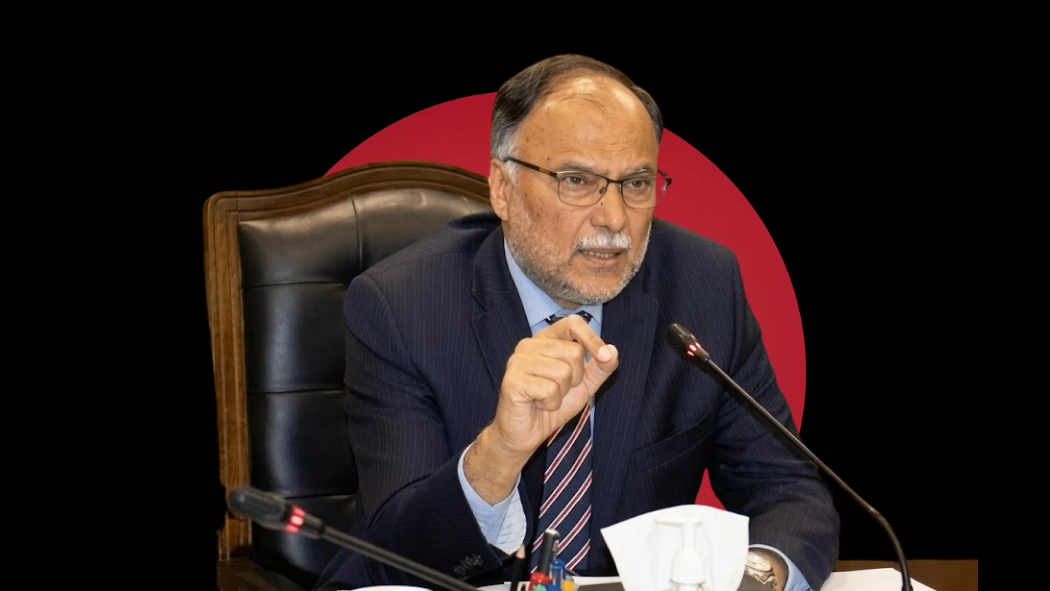
Federal Minister for Planning, Development, and Special Initiatives Ahsan Iqbal reiterated that Pakistan possesses an estimated $7 trillion mineral endowment during an interaction with Farwa Amin, Director for South Asian Initiatives at the Asia Society Policy Institute in New York. Highlighting critical minerals as a central pillar of Pakistan’s foreign policy and macroeconomic stabilization agenda, Iqbal emphasized that Islamabad is pursuing international partnerships—including with the U.S. and China—to move beyond raw extraction toward value-added processing. However, the minister and geological experts caution that the $7 trillion figure represents unverified geological potential, not proven, economically recoverable reserves. Unlocking this value requires sustained political stability, modern processing technologies, and long-term capital commitments.
Federal Minister for Planning, Development, and Special Initiatives Professor Ahsan Iqbal has stated that Pakistan’s total estimated mineral endowment exceeds $7 trillion. Speaking at a session hosted by Farwa Amin, Director for South Asian Initiatives at the Asia Society Policy Institute in New York, Iqbal outlined the federal government’s roadmap to transform domestic geological assets into commercial exports.
Iqbal acknowledged that historical political volatility and security concerns have deterred international mining conglomerates from making long-term capital investments. He argued that recent macroeconomic stabilization allows Pakistan to position critical minerals—including copper, gold, coal, lithium, and rare earth elements—at the center of its international economic diplomacy.
Strategic Partnerships: Balancing Washington and Beijing
Minister Iqbal emphasized that Pakistan is actively seeking private-sector partnerships and multilateral financing to build downstream refining capacity:
- U.S. Commercial Engagement: Pakistan is advancing engagement with American firms, supported by a Memorandum of Understanding (MoU) with US Strategic Metals, potential trade financing through the U.S. Export-Import Bank (EXIM), and active participation in international critical-minerals forums.
- China & CPEC 2.0: Iqbal clarified that expanding commercial ties with Washington will not impact relations with Beijing. Under CPEC 2.0, bilateral cooperation is pivoting from state-funded infrastructure toward business-to-business (B2B) joint ventures in mining, green energy, and industrial processing.
Geoeconomics and Policy Frameworks
The mineral development strategy is structured under the government’s flagship “Uraan Pakistan” initiative and the 5E Framework—which focuses on Exports, E-Pakistan, Energy, Environment, and Equity.
Clarification on Mineral Potential Figures
The government has cited varying estimates for Pakistan’s mineral potential over time. While Iqbal previously cited potential figures reaching $8 trillion, technical experts emphasize that these numbers reflect speculative in-situ geological estimates.
Geological surveys require extensive exploratory drilling, bankable feasibility studies (BFS), and significant infrastructure development before unmapped mineral deposits can be classified as proven, commercially viable reserves.

 Business
 Business
 Business